
Overview
Subject brand: Youtheory (Jamieson Wellness)
AI platforms: ChatGPT, Perplexity, Gemini, Google AI Overviews, Google AI Mode
Baseline: Google organic rankings (from stored SerpAPI payloads)
Summary
This experiment looks at how often supplement brands get recommended by AI platforms when people ask GLP-1 (e.g. Ozempic and Wegovy) related questions, and whether that picture matches the brands Google surfaces in its traditional SERPs. We ran ten standardized queries every day across five AI platforms for six weeks, pulled the brand mentions out of the AI answers, and compared them against the Google organic rankings captured in the same SerpAPI responses.
We expected the brand ranking at the top of Google to be the brand AI tools recommend too. It wasn’t.
The result is a clear split. Youtheory does well on Google but rarely shows up in what the AI platforms recommend. Its website ranks near the top of Google’s organic results for these questions, with a best position of #1 and an average of #4.3. Yet of the 91 times Youtheory was named across every AI answer we collected, 89 came from the one query that mentions it by name. On the other nine questions, the ones real customers could potentially type, Youtheory came up twice.
Competitors such as Momentous, Vidafuel and OWYN were each named 30-50 times on those same questions.
The average overlap between the brands AI names and the brands ranking on Google was only 15 percent.
In short, ranking on Google no longer guarantees an AI will mention you. Youtheory’s competitors are getting those mentions instead.
This matters because product discovery is moving toward AI. By early 2026, 37% of active AI users said they start a search with an AI tool instead of Google, and 54% said they’ve used AI to compare products before buying (Eight Oh Two, 2026).
1. Dataset
Everything here comes from Gander’s own AI tracking, collected the same way we monitor any brand across the AI platforms.
Quantity | Value |
AI brand mentions (raw) | 2,118 |
Resolved to verified product brands | 881 |
Google organic ranking rows | 3,054 |
Standardised queries | 10 |
AI engines | 5 |
Observation window | 9 Mar to 18 Apr 2026 (6 weeks) |
AI answers analyzed | 1,382 |
The ten queries were chosen to span three intents: one that names the brand directly, and nine that describe a problem or a product a shopper might be looking for.
Q# | Query |
Q1 | Is youtheory good for GLP-1 support (brand-direct) |
Q2 | Nutritional deficiencies from Wegovy |
Q3 | How to avoid muscle loss on GLP-1 |
Q4 | How to prevent hair loss on Ozempic |
Q5 | Supplements for Ozempic side effects |
Q6 | Best multivitamin for Ozempic patients |
Q7 | Vitamins to take with Ozempic |
Q8 | Best protein powder while on Wegovy |
Q9 | Best collagen for GLP-1 users |
Q10 | Best supplements to take with Ozempic |
2. Method
On the AI side, we pulled every brand mentioned in each answer and kept the consumer product brands, the things a shopper would buy. Medications like Ozempic and ingredients like Vitamin D were set aside, since they don’t compete for the sale. That left 881 verified product brand mentions.
The organic rankings come from the organic results inside every Google AI Overview. The AI Overview and those results come from a single search for the same question, so both sides are measured on the exact same ten questions. A brand counts as present on Google when its own website ranks, for example youtheory.com. We excluded publisher articles like Healthline and GoodRx. Those sites rank for almost everything, and the shopper is choosing between brands, so brand-versus-brand is the comparison that tells us something.
The overlap between the two channels is measured with a Jaccard similarity score: for each query, the set of brands AI names against the set of brands whose websites rank on Google, divided so that an identical set scores 1 and no shared brands scores 0. Because Question 1 names Youtheory and would otherwise flatter it, the competitive comparisons report the nine discovery queries on their own, so the subject brand is judged on the same footing as everyone else.
3. Results
3.1 Who the AI engines name
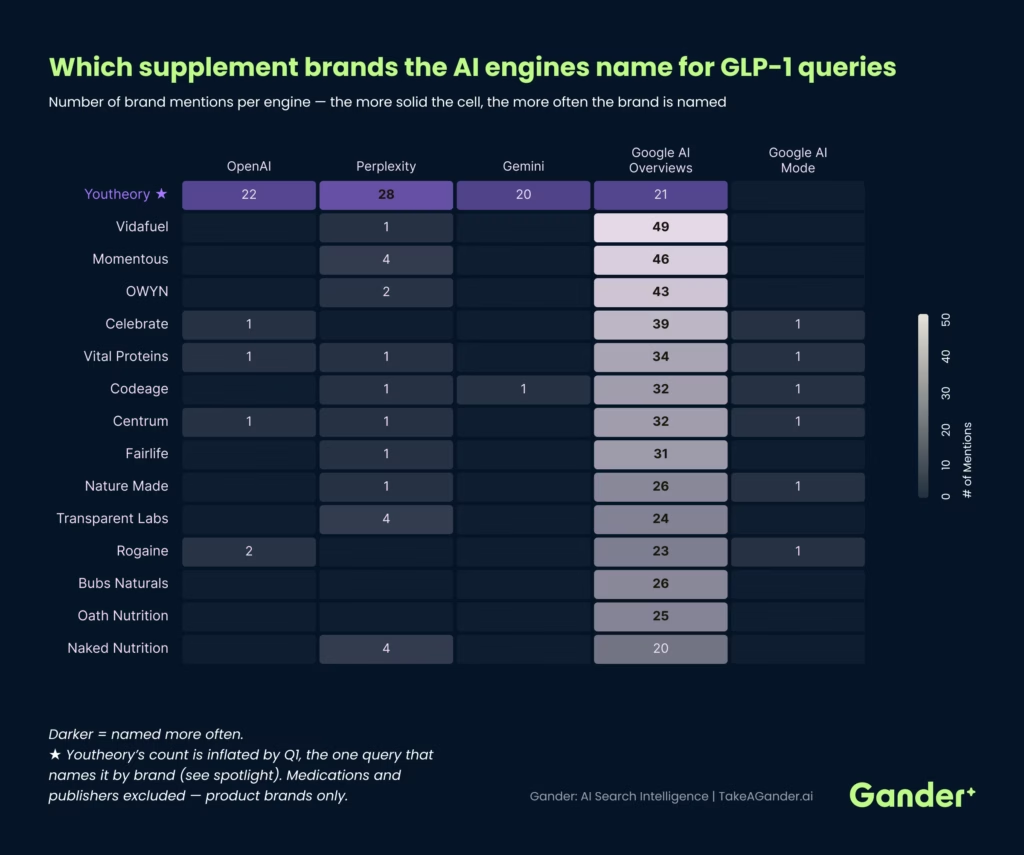
Google AI Overviews names brands far more often than the other platforms in our data, which is where most of the brand-level competition is happening today. The other platforms name brands less consistently, and ChatGPT in particular often answers these questions without naming a specific product at all. Youtheory looks strong in this chart only because of Question 1. Remove that question, as Section 3.5 does, and its numbers drop to almost nothing.
3.2 Do AI and Google agree?
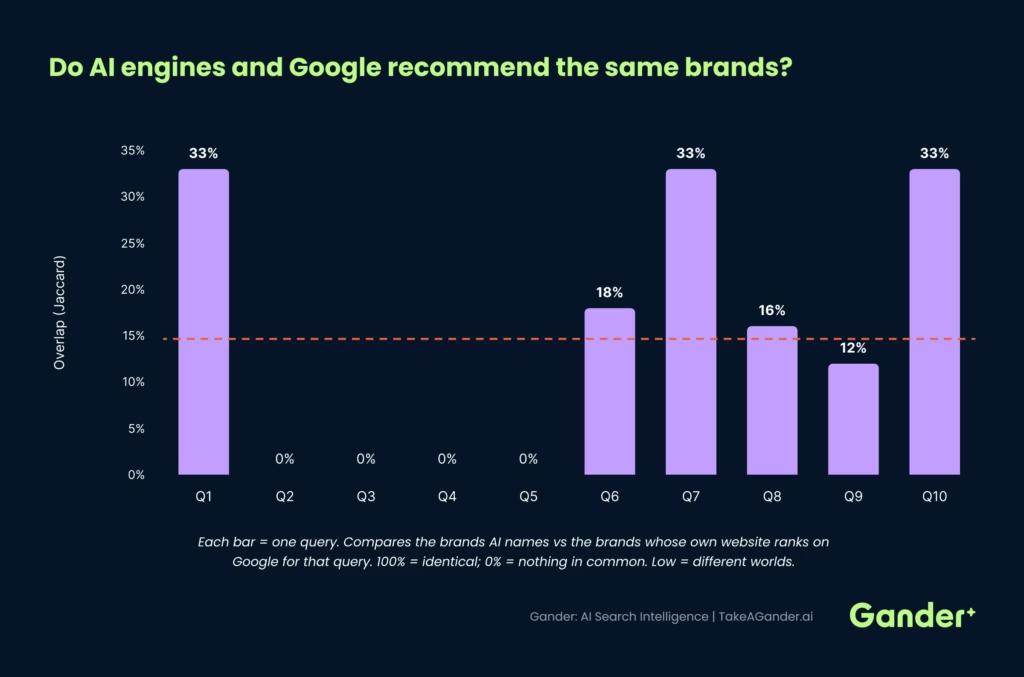
The average overlap is 15 percent, and on four of the ten questions it’s zero. For most of these, the AI’s picks and Google’s top results barely intersect. That is why AI visibility needs its own work, separate from the SEO you’re already doing.
3.3 Where each brand wins
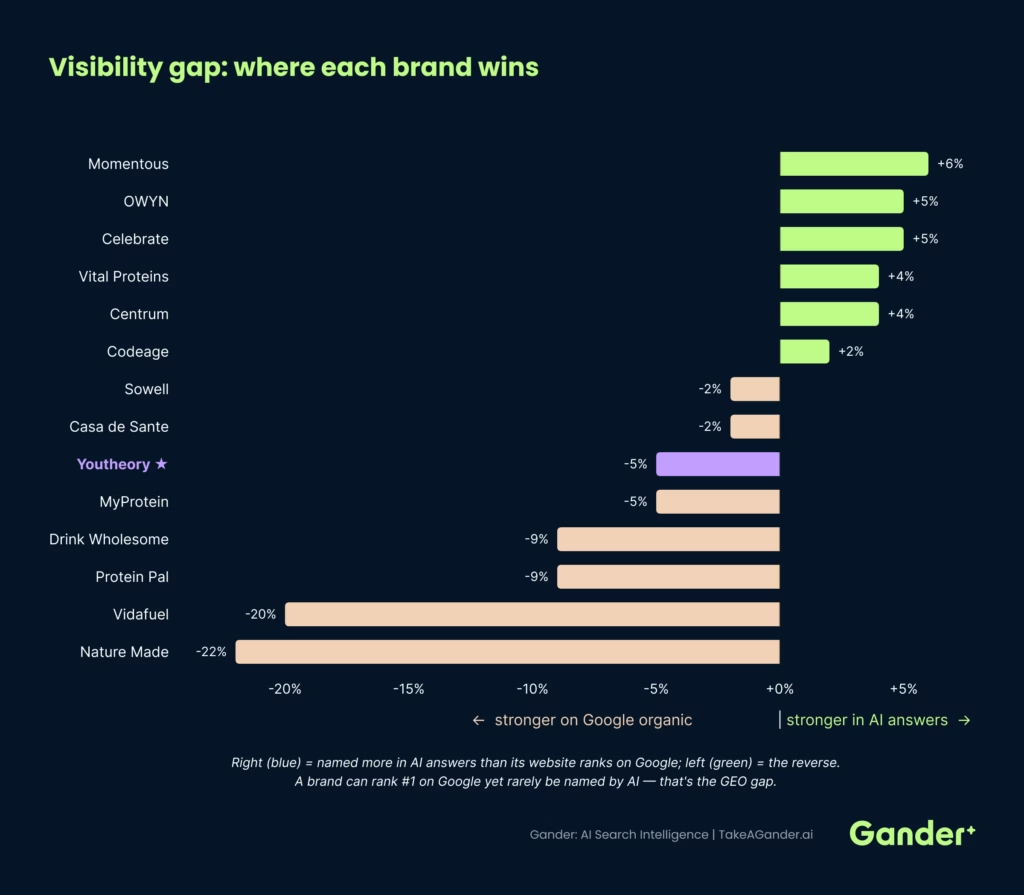
Momentous, OWYN and Celebrate get named by AI more than their Google footprint would suggest, while Nature Made and Vidafuel rank heavily on Google but are named proportionally less often by AI. Youtheory sits just to the left of centre, but this view still includes Q1; once that query is removed, its real gap on discovery questions is much wider, which is the subject of Section 3.5.
3.4 Stability over time
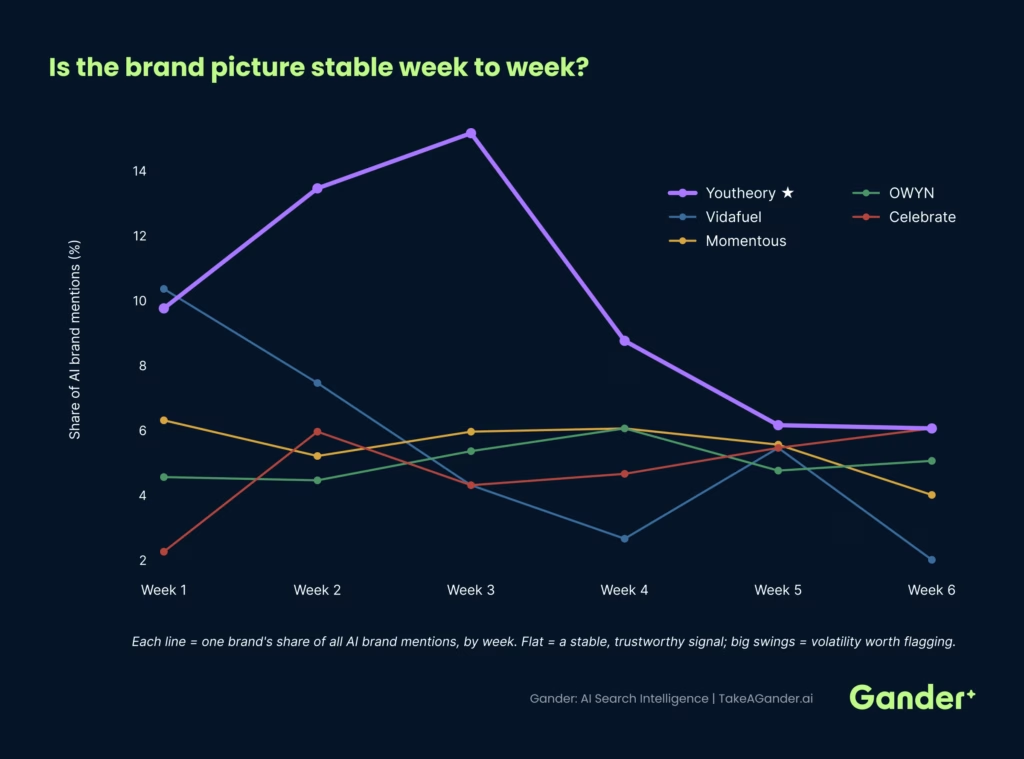
Brand shares move week to week. Vidafuel runs from about 10 percent down to 2 percent across the six weeks. One day of data can point the wrong way, so its important to use a multi-week average when you track this.
3.5. Youtheory spotlight
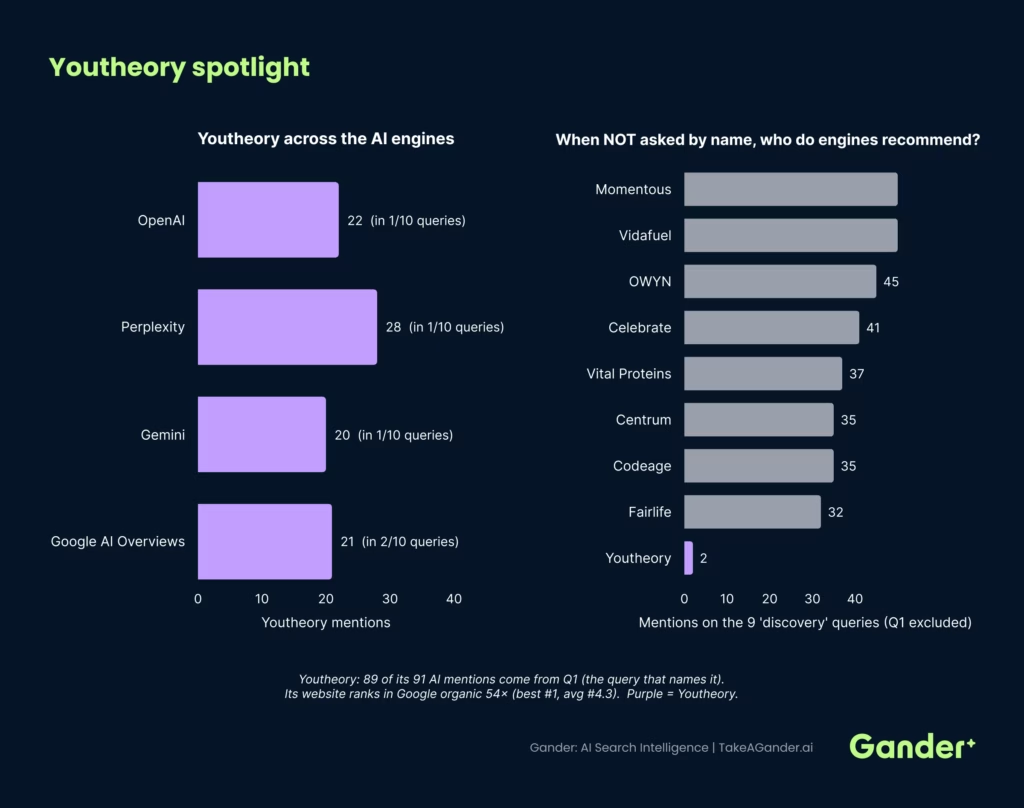
Youtheory shows up in one or two of the ten questions per platform, and almost always the one that names it. Across the nine discovery questions it gets two mentions. Competitors get 30 to 50. Over the same six weeks, youtheory.com ranked in Google’s organic results 54 times, best position #1, #4.3 on average. Youtheory has the Google authority. It isn’t reaching the AI answers.
4. What this means
Youtheory’s traditional search presence works. Its presence inside AI answers doesn’t. The category can clearly be ranked in, since Youtheory already ranks in it, so what’s missing is authority in the places AI pulls from.
Look at the brands already winning with AI. Momentous, Vidafuel and OWYN keep appearing on the general questions where Youtheory doesn’t, so their content, and the third-party sites citing them, are worth studying closely. Most of this is playing out inside Google AI Overviews right now, while the other platforms stay generic, so that’s where to start.
5. Limitations and methodology
A few limits worth flagging. We compared brand to brand and counted only consumer products, so medications and ingredients don’t dominate; both are explained in the method above. Counting a brand as present only when its own site ranks leaves out publisher articles like Healthline and GoodRx, so a follow-up could check whether AI and Google draw from the same sources. Products outside our brand list aren’t counted. Collection stopped on 18 April 2026, so this covers a single six-week window.
Two more limits come from the questions themselves. We chose the ten ourselves instead of pulling them from real search logs, so we’re assuming they match how customers phrase things; real query data would confirm it. The answers also come from fresh sessions with no history, and a real person’s results get shaped by their past searches, so personalization could move real-world visibility in either direction. We didn’t capture that.
Each query also carried a short instruction to make the AI Overview appear, so the Google results reflect that slightly longer query string. Google’s organic results are largely insensitive to trailing text, but it is worth recording. Claude and Copilot are not included in this dataset, so the findings cover the five platforms listed above.
Conclusion
Youtheory owns the top of Google for these GLP-1 questions and barely registers when an AI answers them. Its competitors get named again and again. The test is easy to run for any brand: ask the AI platforms what your customers ask, leave your brand name out, and see who comes up. If it isn’t you, the fix isn’t more SEO. It’s getting your brand into the sources the AI leans on before it answers, the roundups and the recommendation lists.
About the Author: Ibraheem Azhar
Ibraheem is an AI Engineer working on GEO and AI-search research at Gander, building models ground up and running experiments like these to see how orchestration layers can be reverse engineered for insight.