
37% of users now prefer using AI tools (as opposed to traditional search engines like Google) to get answers to their questions, find new products or services, and compare brands. So, if your brand isn’t showing up on tools like ChatGPT and Claude, you don’t exist to the third of users who begin their search with AI.
Boosting your AI visibility starts with finding out if and how your brand shows up on AI search results. This is where Generative Engine Optimization (GEO) tools like Gander and Profound shine. By letting you know how visible you are on LLMs and what you can do about it, these tools help you optimize for GEO and drive more traffic.
In this guide, we compare Gander vs. Profound, and see how the two tools stack up against each other on LLM coverage, competitive analysis, onboarding, pricing, and more.
TL;DR: Which GEO tool fits your business?
Both Gander and Profound perform similar functions: tracking how your business shows up on AI. But, there are a few core differentiators.
Gander ensures a higher degree of accuracy by not changing any of the default parameters of LLMs, such as not limiting fan-out queries. It also audits your website to find both technical and non-technical AI-optimization gaps.
Profound provides coverage of key performance indicators (KPIs), tracking things like brand sentiment analysis and share of voice. The tool also offers content creation features for some plans.
A quick glance at Gander vs. Profound
Feature | Gander | Profound |
Stand-out feature | Provides the most accurate results as it doesn’t change the default LLM configurations or limit fan-out queries (while Profound limits theirs) | Tracks a more comprehensive set of metrics, including shopping mentions |
LLM coverage | ChatGPT, Gemini, Perplexity, Google AI Overviews, and Google AI mode (in beta) — no matter your plan. | Basic plan only covers ChatGPT; anything else needs more expensive plans. The Enterprise plans track up to 10 LLMs. |
Pricing | Starts at $150/month | Starts at $99/month |
Onboarding | Runs your prompts 6 times initially, and daily after that | Runs your prompts daily |
KPIs tracked | Citations, visibility, mentions, and average positioning, with sentiment analysis in beta | Also tracks shopping mentions |
Competitive benchmarking | Tracks competitors’ visibility, citations, and mentions to see how their AI visibility compares to that of yours. Can view full responses for competitors. | Provides data about competitor’s visibility, citations, share of voice, and mentions when tracking your AI visibility |
Optimization solutions | Provides a comprehensive set of technical optimization solutions to improve your AI visibility, such as an AI search console and insights engine | Only helps you optimize your content |
Integrations | GSC and BWT in beta | Several robust integrations |
Security | SOC II + HIPAA compliant | SOC II + HIPAA compliant |
Best for | Small-to-mid sized in-house teams, agencies; government organizations | Enterprises who have a large budget and dedicated GEO analysts on their team |
Now, let’s compare each feature of the GEO tools in detail.
Core methodology
Both Gander and Profound work by running your prompts daily through generative AI tools to see if and how you’re showing up on AI search engines. Both tools use conversational prompts (“How do I book tickets from Canada to UK?”) instead of keywords (“flights from Canada to UK”) to get accurate results. They also identify the user search intent behind each prompt.
Gander scans your website, or Google Search Console/ Bing Webmaster Tools to find relevant key phrases and create relevant prompts for your website. Additionally, you can paste keywords to fashion prompts out of them, or write your own. You can tweak your prompts whenever you want.
Profound pulls prompts from real conversations that users have with AI (accessed through third-party data sources). It’s worth mentioning that this approach is flawed as LLM providers don’t share information about their users with third-party sources, so any data out there is just a rough guess based on the behaviors of a small group of users.
The area where Gander stands out is that the tool doesn’t change any of the default LLM parameters. Without getting too technical, adjusting LLM parameters helps you fine-tune the responses you get from the chatbots. This essentially means you’re tailoring the output to your will instead of recording what other users see, which reduces accuracy.
Specifically, Gander doesn’t reduce the number of query fan-outs for each prompt, while Profound limits it to two. The typical average for fan-out queries is 4-6, up to a maximum of 10. When you ask an AI chatbot a question, it breaks that question into several sub-questions and fans them out to collect data on each. The chatbot, then, combines all the answers to the sub-questions into one comprehensive answer for you.
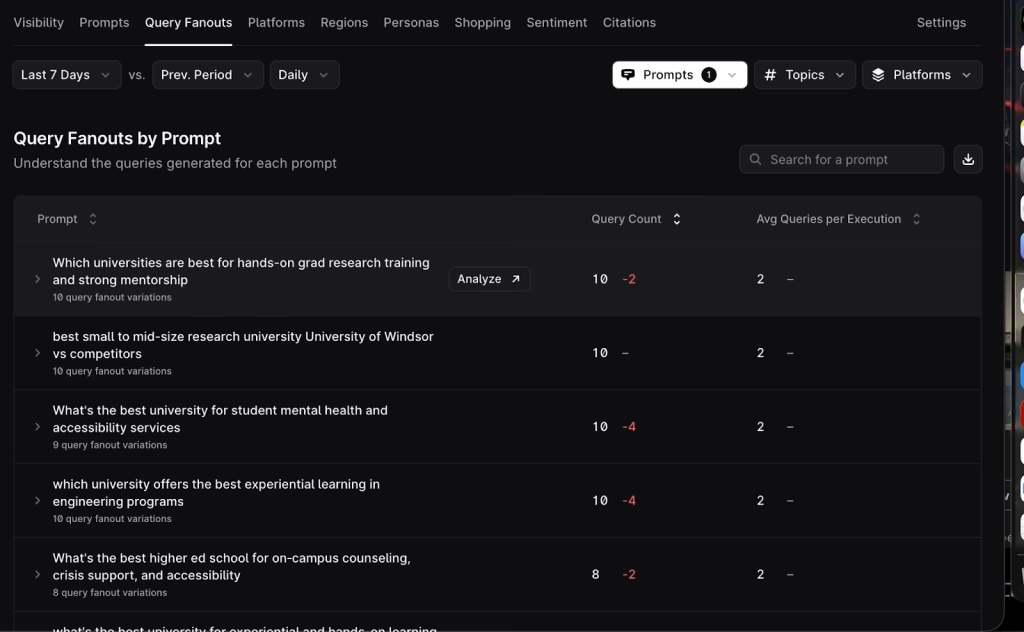
When you restrict the number of fan-out queries, you get limited data and lower AI accuracy, which reduces your chances of seeing how LLMs view your content. Think of it as reading multiple books on various sub-topics versus reading just a single book. Running multiple sub-queries also increases computational costs, which is why tools like Profound limit them.
Winner: Gander, as it gives more accurate and comprehensive insights into your AI visibility.
Onboarding
The onboarding process is quick and easy on both GEO tools. Once you create an account and log in, both sites prompt you to enter the website you would like to track.
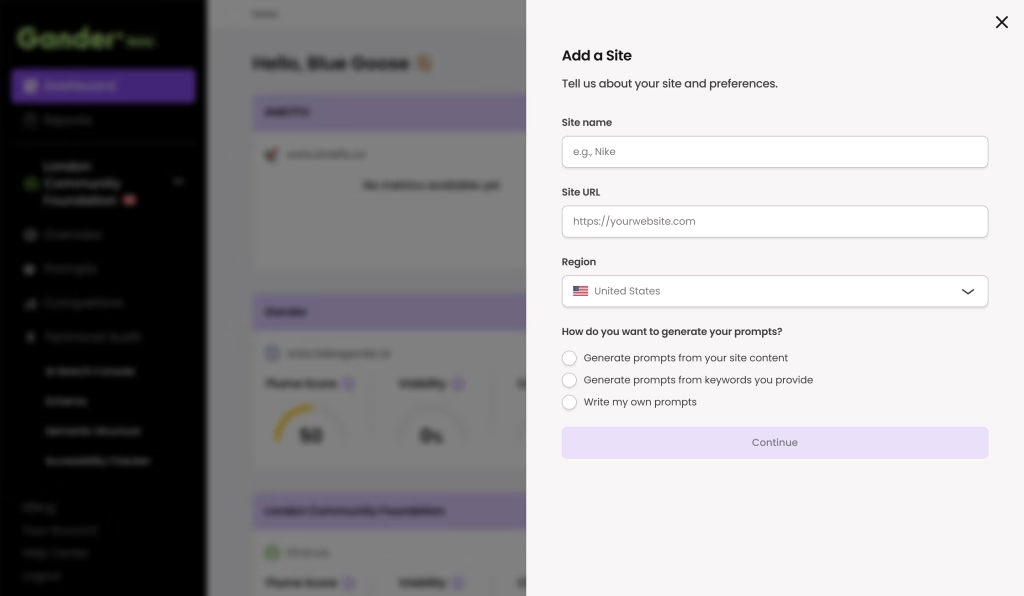
Gander gives you multiple options regarding prompt creation. You can either let the tool analyze your site and create prompts for you, add keywords and let Gander make prompts out of them, or write your own custom prompts. No matter which option you choose, you can tweak your prompts any time.
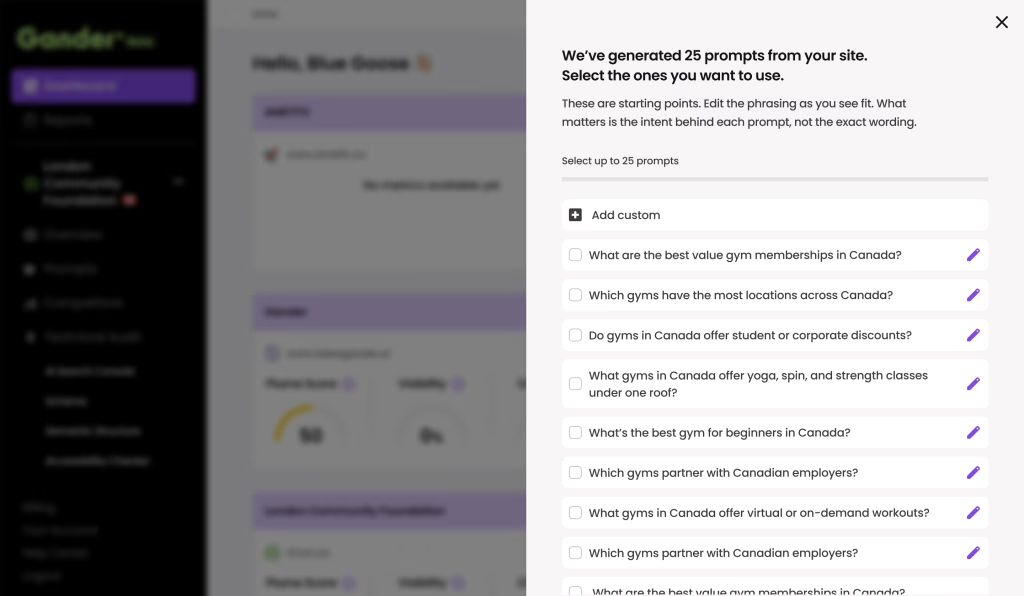
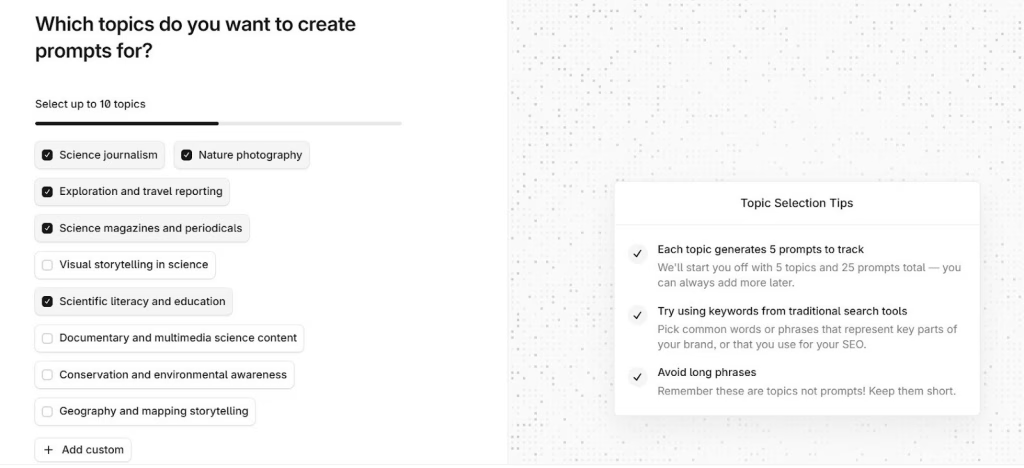
Profound asks you to choose 5 topic buckets related to your website before creating 5 prompts for each topic (25 in total). You can edit these prompts later on.
Profound also gives you data about prompt volume, i.e. the number of prompts containing your keywords. But, this is flawed data based on rough estimates since LLMs don’t share any information related to prompt volume.
Once the prompts have been finalized, Gander runs each prompt 6 times during the onboarding run. After the initial phase, both tools run your prompts daily.
Why does this matter? Because, unlike traditional search engines that more or less return the same results every time, AI tools may give different answers each time you run an identical prompt. So, running the same prompt(s) multiple times gives a higher degree of accuracy and consistency.
Gander also schedules personalized onboarding calls to guide you through using our tool and making it work for you, which Profound lacks.
Winner: Gander takes the lead because it allows you to create your own prompts from the get-go and runs them 6x during onboarding.
Dashboard navigation
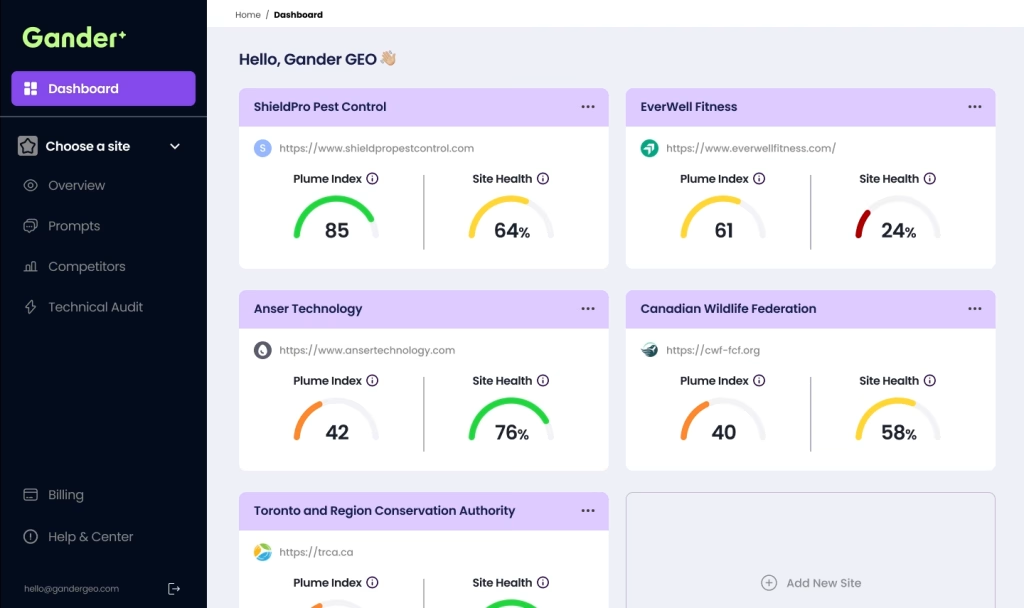
Both tools have easy-to-use interfaces with all the available features listed clearly on one side. However, a lot of users report that Profound’s dashboard is confusing, hard to navigate, and requires a steep learning curve.
Gander also has fewer but more effective features than Profound, which means your dashboard isn’t bombarded with unnecessary information that isn’t useful to you.
Winner: Either, because how difficult or easy you find a dashboard, depends on your experience level.
LLM coverage
No matter which pricing plan you choose, Gander tracks your AI visibility across 4 (+1) AI tools: ChatGPT, Gemini, Perplexity, Google AI overviews, and Google AI mode (in beta).
Profound, however, limits the number of supported AI models on the lower-tier plans. Its basic plan only tracks mentions on ChatGPT. This matters because Gemini is second only to ChatGPT in worldwide traffic share among AI tools.
While ChatGPT has a 64% share (down from 86%), Gemini’s share climbed up from 5% to 21%. So, when you don’t track your visibility on Gemini, you lose out on the chance to optimize your brand to 1/5th of all AI users.
The same goes for AI overviews. With 14 billion searches daily, Google and its AI overviews still hold the lion’s share of the search market, handling 373x more searches than ChatGPT. With this much visibility at stake, you really can’t afford to ignore the other search engines.
Here’s a breakdown of the AI engines that Profound tracks on each plan:
Profound’s plan | Starter | Growth + Agency Growth | Enterprise + Agency Enterprise |
Answer engines tracked | ChatGPT | ChatGPT Perplexity Google AI Overviews | ChatGPT Perplexity Google AI Overviews Google AI mode Gemini Copilot Meta AI Grok DeepSeek Claude |
In short, Profound gate keeps the tracking of anything other than ChatGPT behind a paywall.
Winner: Gander, since it tracks your visibility across all the 4 (+1) supported (major) chatbots, which make up more than 90% of the AI market share, right from the basic plan.
KPIs tracked
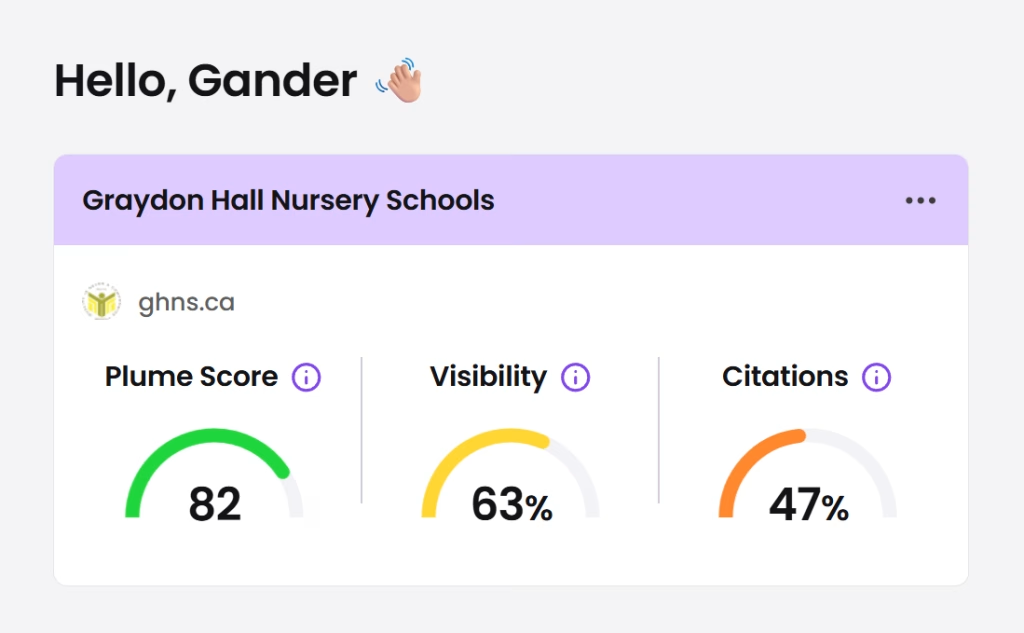
While both Gander and Profound track metrics such as AI visibility, citations, and average positioning, Profound also offers additional insights, such as share of voice and shopping mentions.
Metrics | What it means | Gander | Profound |
Sources | Where AI pulls its answers from | Yes + categorizes the sources to help your brand determine the best course of action for digital PR, and lists the actual AI responses so you can see where your brand is mentioned | Yes + lists the actual AI responses so you can see where your brand is mentioned |
Citations | When AI links to your website | Yes | Yes |
Mentions | When AI mentions your website by name without linking it | Yes | Yes |
AI visibility score | How visible your brand is | Yes | Yes |
Average positioning of prompts | Your brand’s average ranking among AI answers | Yes | Yes |
Share of voice | How your brand is mentioned in AI answers when compared to your competitors | No | Yes |
Brand sentiment analysis | What AI users think about your brand | Yes (in beta); Gander not only tracks sentiment changes in AI responses, but also in third-party links | Yes; Profound not only tracks sentiment changes, but also categorizes positive feelings (for example: “affordable” or “reliable”) |
Shopping visibility | Whether your brands show up in shopping and/or brand comparison queries | No | Yes |
Gander also tracks your brand variations. AI responses use content from a variety of sources, some of which may refer to your brand differently. Take Gander, for instance. Some sources may refer to it as “Gander AI analytics,” while others may use another iteration, such as “Gander AI Search Intelligence.” Gander provides granular visibility into these brand aliases, giving you a complete picture of how your brand appears across AI responses.
Winner: Profound, since it provides more metrics to analyze your AI visibility.
Competitor analysis
Both tools give you insights on how you’re performing on AI search engines when compared to your competitors.
Gander has a separate section for competitive analysis. It automatically identifies your rivals and provides comparison data on overall performance and every single prompt you track.
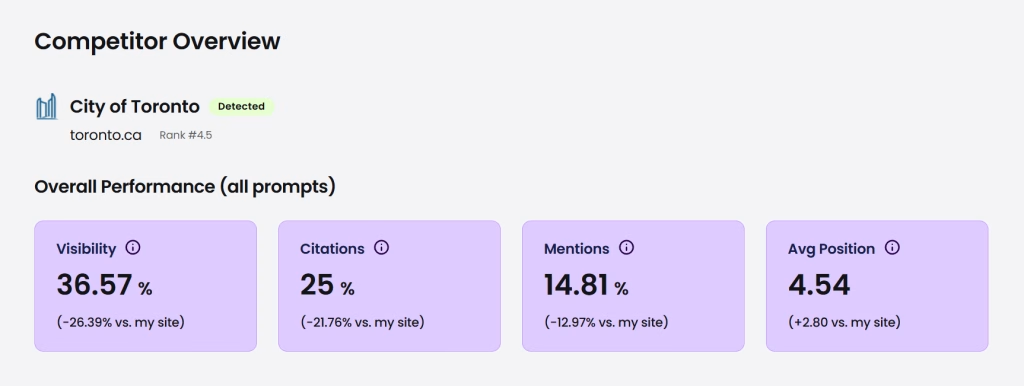
You can clearly see how ahead (or behind) your competitors are when compared to you.
While Profound doesn’t have a separate section for competitor tracking, all of its citations include data about your rivals. You get insights into competitors across the same metrics: share of voice, mentions, citations, and brand sentiment.
Winner: It’s a tie, since both tools excel at this feature.
Optimization
Rather than just showing you how you appear in AI search results, both Gander and Profound make sure your website isn’t blocked from AI crawlers. But, there’s a fundamental difference between the tools.
Gander audits your entire website, including the technical parts like:
- Semantic structure: The language that search engines use to learn what your website is about
- Schema markup: Helps search engines get context about the content on your website
- Web Content Accessibility Guidelines (WCAG) accessibility: International guidelines to make your website accessible to people with disabilities
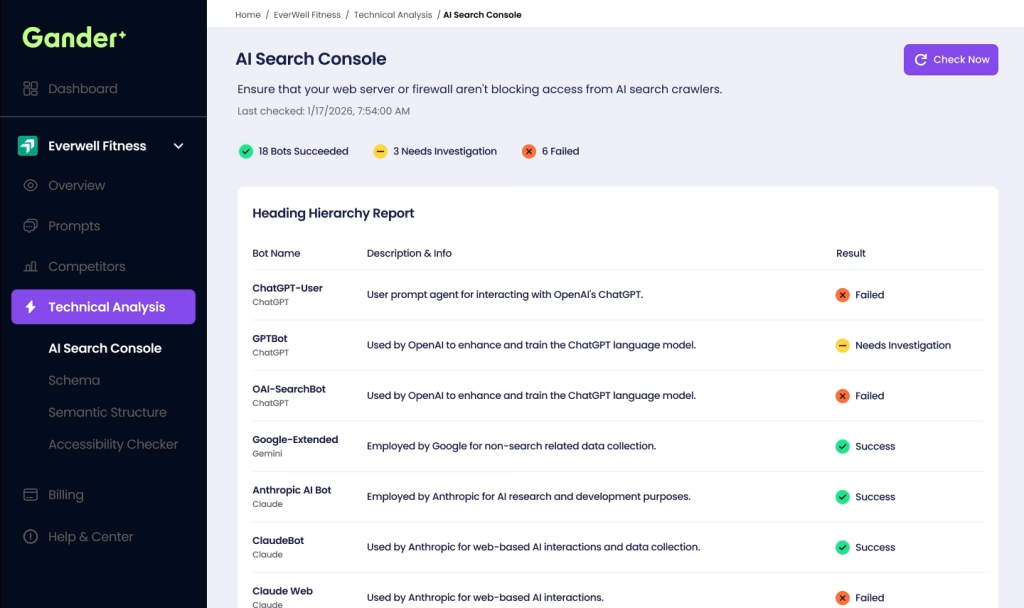
After auditing the technical elements, Gander gives you clear recommendations on how to fix your problems. Unless your website’s technical SEO is sound, AI won’t be able to access, understand, or trust your content, so Gander’s technical audits directly boost your AI visibility.
Their Optimize and Authority pricing plans also include personalized 1:1 coaching with search experts.
Profound also analyzes your website and gives optimization recommendations, but only for the content you’ve created. It doesn’t audit the technical side of your website, which means you’ll need to use a different platform for it.
However, Profound does offer AI-friendly content creation features for some plans.
Winner: Gander, since it gives you a full picture of all the issues that might be weighing your AI visibility down.
Integrations
Gander is currently integrated with Google Search Console (GSC) and Bing Webmaster Tools (BWT) in beta. They plan to add more integrations soon, starting with Google Analytics 4 (GA4) and WordPress.
Profound has a robust set of integrations including GA4, G2, Vercel, WordPress, CloudFlare, AWS, Netlify, Fastly, Akamai, and more.
Winner: Profound, as it offers a vast set of integrations that turn their insights actionable.
Pricing breakdown
Gander has 3 pricing plans, and each one offers a 14-day risk-free trial. Additionally, you can book a demo and get a guided walkthrough of Gander, regardless of the plan you would like to choose. Here’s a quick overview:
Plan | Pilot | Optimize | Authority |
Price | $150/month | $500/month | $1,000/month |
Number of prompts | 10 prompts per LLM, so 40 in total | 50 prompts per LLM, so 200 in total | 100 prompts per LLM, so 400 in total |
Number of AI engines tracked | 4 | 4 | 4 |
Cadence | Daily | Daily | Daily |
Number of sites | 1 | Unlimited | Unlimited |
Number of competitors | 10 | 30 | Unlimited |
Number of languages | 1 | 1 | 1 |
Profound offers 3 pricing plans for brands and 2 separate plans for agencies, for a total of 5 plans. Only the Brand Growth plan has a 7-day free trial, and you can only book a demo for the Enterprise plans. Find the overview below:
Plan | Starter (Brand) | Growth (Agency) | Growth (Brand) | Enterprise (Brand) | Enterprise (Agency) |
Price | $99/month | $99/month + add-ons | $399/month | Custom; pricing not available publicly | Custom; pricing not available publicly |
Number of prompts | 50 | 25 | 100 | Custom | Custom |
Number of AI engines tracked | 1 | 3 | 3 | 10 | 10 |
Cadence | Daily | Daily | Daily | Daily | Daily |
Number of sites | 1 | 10+ add-ons | 1 | Custom | Custom |
Number of competitors | Unlimited | Unlimited | Unlimited | Unlimited | Unlimited |
Number of languages | 1 | 1 | 1 | Custom; you can choose any region and language you want | Custom; you can choose any region and language you want |
Gander offers more value than Profound at similar price points without gatekeeping LLM coverage behind a paywall. Profound has a steeper price tag on the plans that offer any kind of value to larger teams, with add-ons requiring additional purchases.
Winner: Gander, as it provides more bang for your buck, even from the most affordable plan.
Verdict: Which tool should you choose?
Both tools have their own pros and cons, so your pick depends on your needs.
Choose Gander if:
- You’re a small to mid-sized agency or in-house team that wants to track AI visibility across all the major AI chatbots without having to pay for an enterprise-level plan
- You’re a government or healthcare organization and need data that’s as accurate as possible
- You want to run periodic technical audits on your website
- You want 1:1 GEO coaching and/or problem-solving sessions with their search experts
Choose Profound if:
- You’re an enterprise with dedicated staff analysts and can afford the Enterprise-level plans with full functionality
- You want a 360-degree view of how you show up on AI, including metrics like brand sentiment analysis and shopping analysis
- You want a content creation feature
Lead in B2B with accurate AI search intelligence. Try risk-free for 14 days by signing up now to see what Gander can do for you.