
37% of consumers now say they start their searches with AI tools instead of traditional search engines like Google, to get answers to their questions, find new products or services, and compare brands. If your brand isn’t part of that conversation on ChatGPT, Gemini, or Google’s AI Overviews, you’re invisible to a growing share of your buyers before they ever hit your website.
Ahrefs is a name every SEO knows, and its AI-visibility add-on, Brand Radar, is a natural next step for teams already living inside the Ahrefs suite. But Brand Radar isn’t a standalone product. It’s a paid add-on stacked on top of a paid SEO subscription, and the way Ahrefs prices and scopes it changes the calculus for anyone evaluating it purely as a GEO tool.
In this guide, we compare Gander vs. Ahrefs Brand Radar on pricing, LLM coverage, methodology, reputation tracking, and more, so you can see which tool actually fits your AI-visibility budget and goals.
TL;DR: Which GEO tool fits your business?
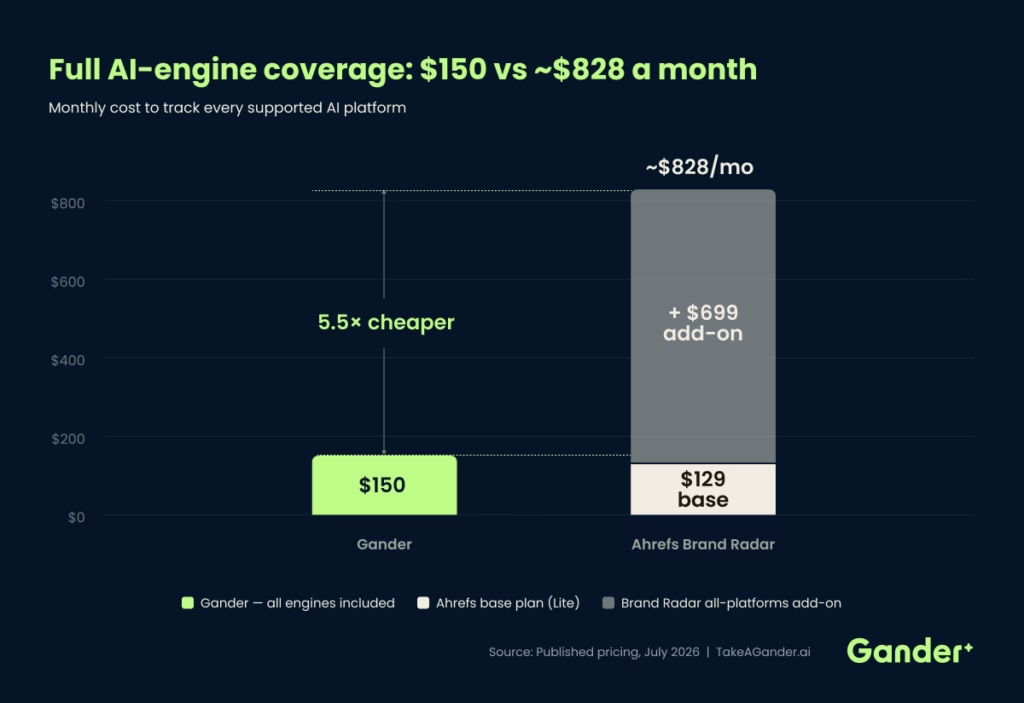
Gander and Ahrefs Brand Radar both track how your brand shows up in AI answers, but they come from very different starting points. Ahrefs Brand Radar is an add-on bolted onto Ahrefs’ core SEO suite. You need an active Ahrefs plan (from $129/month on the Lite tier) just to unlock it, then you pay $199/month per AI platform or $699/month to bundle all of them, pushing the realistic cost of full coverage to roughly $828/month. Gander is a purpose-built AI-visibility platform with all major engines included from its $150/month entry plan.
Ahrefs Brand Radar also has a real, official gap: it doesn’t track Claude at all, and its newly added Grok index only went live on April 24, 2026, with Ahrefs’ own help documentation still flagging intermittent data-collection issues tied to a policy change on X’s side. Gander doesn’t track Grok or Claude either today, but it isn’t charging a premium for partial coverage, and it backs its AI-visibility data with a genuinely deep reputation and sentiment layer that independent reviews don’t find an equivalent for inside Brand Radar.
A quick glance at Gander vs. Ahrefs Brand Radar
Feature | Gander | Ahrefs Brand Radar |
|---|---|---|
Stand-out feature | Full AI-engine coverage on every plan, plus deep reputation/sentiment reporting on both AI answers and third-party links | Massive search-backed prompt database (well over 200 million prompts) plus YouTube, TikTok, and Reddit visibility scanning |
LLM coverage | ChatGPT, Gemini, Perplexity, Google AI Overviews, Google AI Mode (in beta), no matter your plan | Google AI Overviews, Google AI Mode, ChatGPT, Perplexity, Gemini, Microsoft Copilot; Grok was added in April 2026 but data collection has been intermittent; Claude is not supported at any price |
Pricing | Starts at $150/month, full engine access included | Requires an active Ahrefs plan (from $129/month) plus the Brand Radar add-on ($199/month per platform or $699/month for all six), roughly $828/month minimum for full coverage |
Onboarding | Runs your prompts 6 times initially, and daily after that | No manual onboarding needed for the core index (pre-built from Ahrefs’ existing prompt database); custom prompts require separate setup and a separate paid tier |
KPIs tracked | Citations, visibility, mentions, and average positioning, with sentiment analysis in beta | Share of voice, mentions, citations, and impressions |
Competitive benchmarking | Tracks competitors’ visibility, citations, and mentions to see how their AI visibility compares to yours; view full responses for competitors | Benchmarks your brand against competitors on share of voice, mentions, citations, and impressions inside the same report |
Optimization solutions | Provides a comprehensive set of technical optimization solutions, including a technical site audit (schema, semantic HTML, WCAG accessibility) and an insights engine | Focused on discovery and reporting; no dedicated technical AI-optimization audit |
Integrations | GSC and BWT in beta | API and MCP Server access, Looker Studio connector, Report Builder |
Reputation & sentiment | Tracks sentiment in both AI responses and third-party links, and produces full citation/reputation reports for clients | No sentiment or reputation-specific reporting feature documented in independent reviews |
Best for | Small-to-mid sized in-house teams, agencies, government organizations, and anyone who wants full AI coverage without add-on pricing | Existing Ahrefs customers who want a quick, database-driven read on AI visibility layered on top of their SEO subscription |
Now, let’s compare each feature of the two tools in detail.
Core methodology
Gander runs your prompts directly against AI platforms on a recurring schedule, using default LLM parameters and full query fan-out so the data reflects exactly what a real user would see. No throttled sub-queries, no adjusted settings.
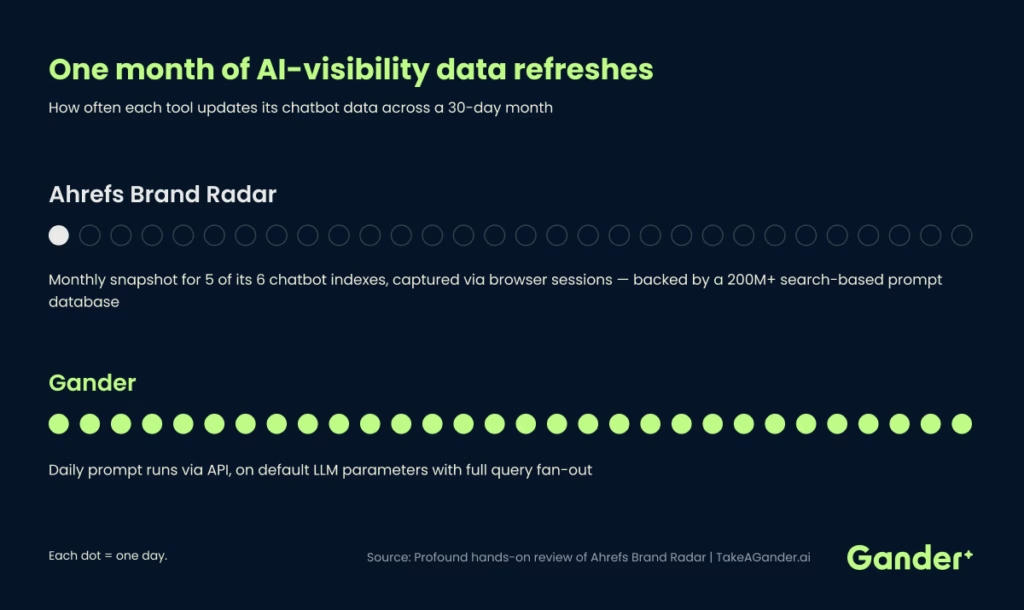
Ahrefs Brand Radar takes a different approach. It draws on Ahrefs’ existing keyword database, specifically Google’s “People Also Ask” data and semantic fan-out, to generate a library of search-backed prompts. The exact scale of that database is genuinely hard to pin down: an independent hands-on review from Profound measured over 218 million prompts across six AI platforms at the time of testing, while Ahrefs’ own press materials for its December 2025 video-and-Reddit expansion cited “over 239M prompts every month” as the underlying infrastructure powering that launch. Other Ahrefs pages have cited figures as high as 400M+. The exact current number is hard to pin down, though the “search-backed, not synthetic” framing itself checks out across every source reviewed. It then runs those prompts through the free, public web interfaces of ChatGPT, Gemini, Perplexity, Copilot, and the rest, capturing what Profound’s review describes as a “snapshot” refreshed just once a month for every chatbot index except Google AI Overviews.
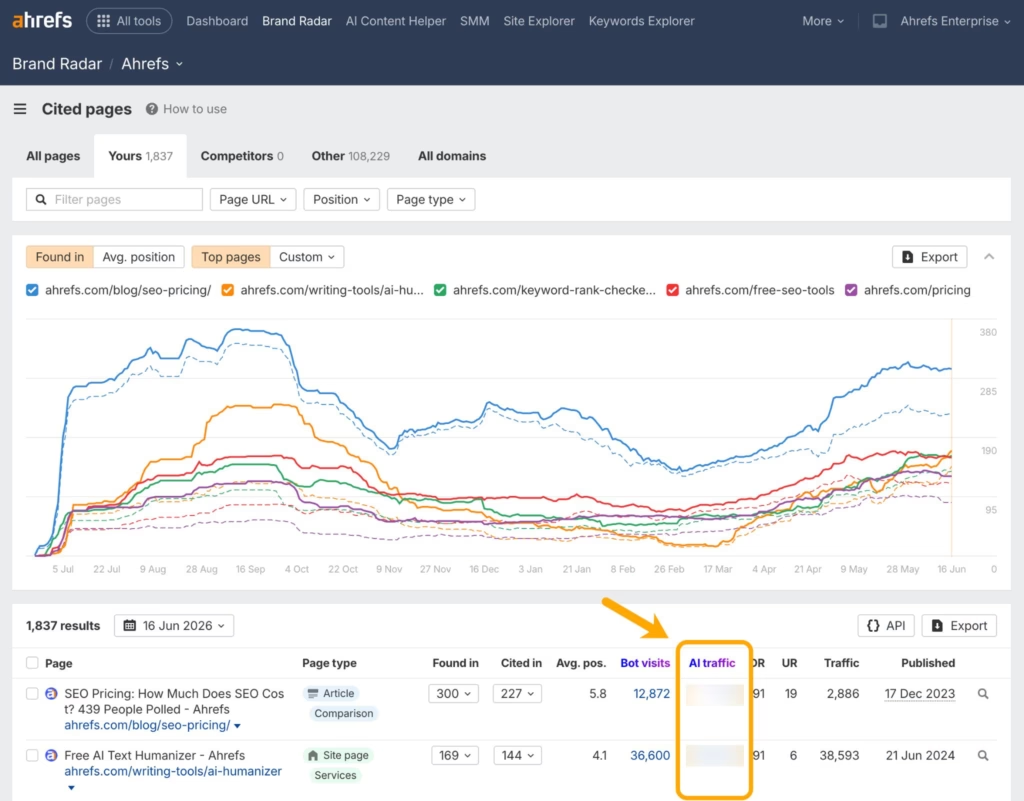
That’s a meaningful architectural difference, and it matters for more than just data freshness. Profound’s independently tested review confirms that Ahrefs’ AI chatbot data refreshes only once a month for five of its six indexes, while Gander checks in daily after onboarding. It’s also worth noting that Ahrefs runs its prompts through browser-based web interfaces rather than APIs, while Gander’s monitoring is API-based, a distinction that affects consistency and how closely the tool can mirror programmatic, repeatable results versus a live web session. The practical effect shows up in accuracy testing, too: one independent agency comparison found Brand Radar undercounted a brand’s ChatGPT mentions by roughly 120 against a manually verified count, a gap documented in a third-party AI-visibility-tracker comparison. That’s the kind of discrepancy a monthly, browser-based snapshot is prone to producing, since it’s measuring a single moment rather than the volatility AI answers actually show day to day.
 Winner: Gander, because daily, API-based monitoring on default parameters gives you fresher and more consistent data than a monthly browser-based snapshot, and independent testing has already surfaced real accuracy gaps in the snapshot approach.
Onboarding
Both platforms get you set up quickly, but they solve different problems. Ahrefs Brand Radar’s core value is that there’s technically no setup required to see AI visibility data for any brand, because it’s pulling from an existing global prompt database rather than prompts built specifically for you. Enter a domain and you can browse historical AI mentions immediately.
The tradeoff is that this pre-built database reflects generic search-driven questions about your category, not necessarily the specific questions your buyers ask. Profound’s testing found the prompt set skews heavily toward Google’s own ecosystem: the majority of prompts come from AI Overviews and AI Mode, meaning coverage for ChatGPT or Perplexity can be thinner for the exact same brand. To track your own custom prompts, you need to purchase a separate custom-prompt tier, and even then, checks are metered: independent testing pegs the base allotment at 2,500 checks per month, where one “check” equals one prompt run through one LLM in one location. Run 10 prompts across all six LLMs in three countries daily, and you’d burn through that allotment in under two weeks, with overage billed per prompt/platform/location combination beyond it.
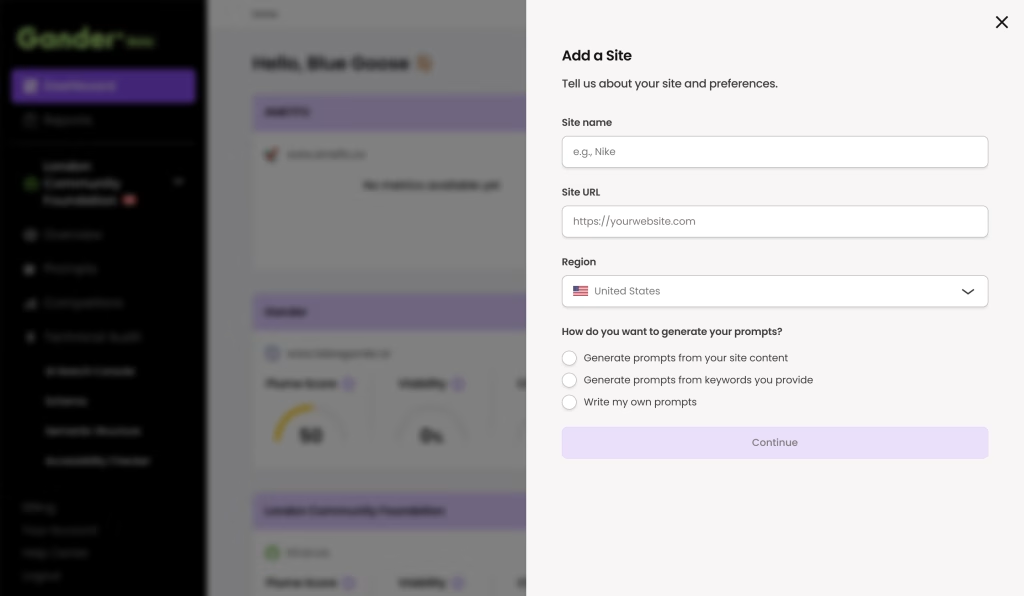
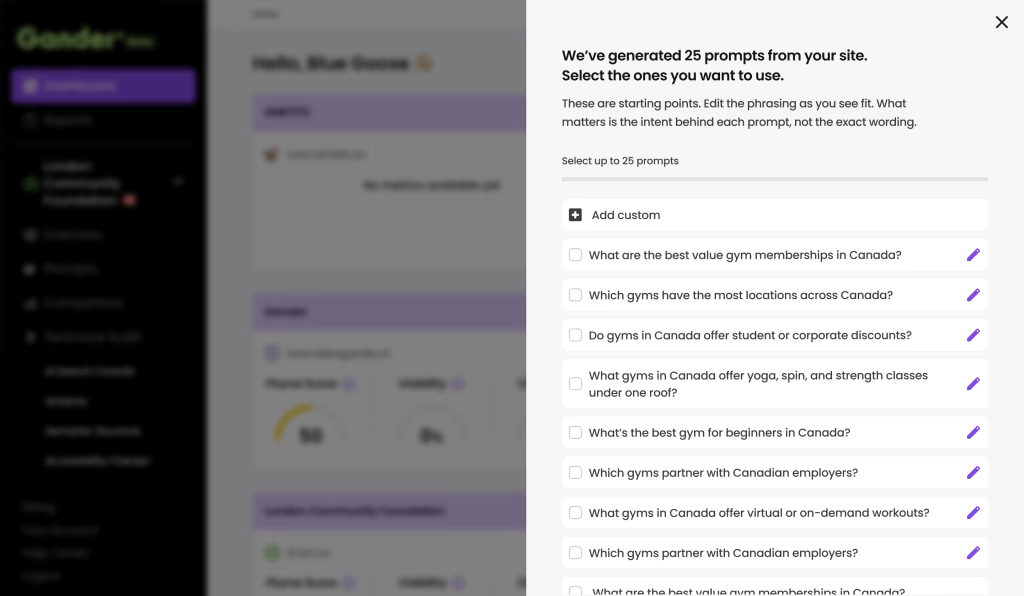
Gander’s onboarding builds your prompt set from your actual site content, your Google Search Console/Bing Webmaster Tools data, or keywords and custom prompts you provide, then runs each one 6 times during the initial onboarding pass before shifting to daily cadence. Running the same prompt multiple times during onboarding matters because AI tools don’t return identical answers to identical questions the way a traditional search engine does; a single pass can miss how much an answer actually varies. Gander also offers personalized onboarding calls to walk you through setup, which isn’t part of Ahrefs’ self-serve add-on model.
Winner: Gander, because it builds a prompt set tailored to your business from day one, with unlimited edits and no metered overage risk baked into the core plan.
Dashboard navigation
Ahrefs Brand Radar lives inside the broader Ahrefs interface, which is a benefit for existing Ahrefs users already comfortable navigating Site Explorer, Keywords Explorer, and the rest of the suite. Everything is in one login. The Overview report gives you Share of Voice, mentions, citations, and impressions in a single view, with drill-downs into AI visibility, search demand, web visibility, video visibility, and SERP visibility, though independent testing notes that several of those drill-downs (search demand, web visibility, YouTube visibility) only unlock once you’re also paying for Ahrefs’ broader Standard or Advanced SEO plans, not just the Brand Radar add-on itself.
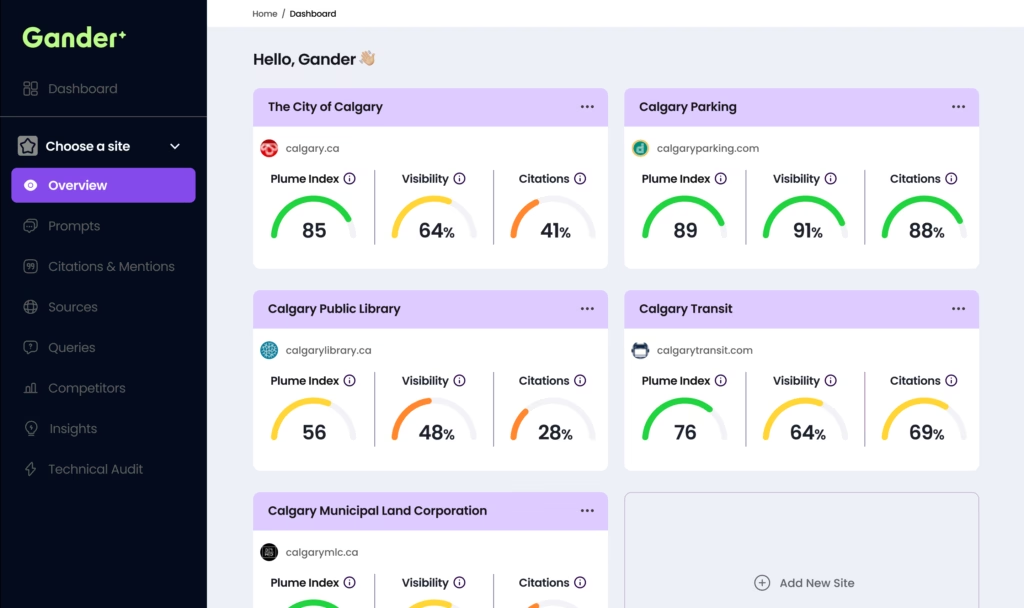
Gander’s dashboard is purpose-built for AI visibility specifically, so it isn’t nested inside a larger SEO product with dozens of unrelated tools competing for space. That focus means fewer menus to dig through if AI visibility is your primary job, though it also means you won’t get Ahrefs’ backlink and keyword-rank tooling in the same login.
Winner: Either, because the right fit depends on whether you want AI visibility bundled into an existing SEO workflow or as its own dedicated tool.
LLM coverage
No matter which pricing plan you choose, Gander tracks your AI visibility across ChatGPT, Gemini, Perplexity, Google AI Overviews, and Google AI Mode (in beta): 4 (+1) engines included from the entry-level Pilot plan.
Ahrefs Brand Radar covers more named platforms on paper: Google AI Overviews, Google AI Mode, ChatGPT, Perplexity, Gemini, and Microsoft Copilot, with Grok added as a seventh index on April 24, 2026. But two caveats matter here. First, an independent hands-on review confirms Brand Radar does not support Claude at all, because any AI platform requiring a login or lacking a public free version falls outside what Ahrefs monitors; the same review also flags Meta AI as unsupported. Second, Ahrefs’ own help documentation notes that following a recent policy change from Grok/X, it has been “temporarily unable to gather new data” for that index at points since the integration launched, so fresh Grok data hasn’t always been flowing even though the platform is nominally supported.
Neither Gander nor Ahrefs currently tracks Claude. But Ahrefs charges $199-$699/month on top of a paid base plan for its engine coverage, while Gander includes its full engine set in every plan starting at $150/month.
Winner: It’s a tie on named platform count, but Gander wins on value, since you get comparable practical coverage without paying per-engine add-on fees.
KPIs tracked
Gander tracks citations, visibility, mentions, and average positioning, with sentiment analysis in beta. It also tracks brand variations, the different ways your brand name might appear across AI responses, giving you a fuller picture of how you’re represented.
Ahrefs Brand Radar’s Overview report tracks Share of Voice, mentions, citations, and impressions, confirmed consistently across independent reviews of the product. That’s a solid discovery-level metric set, but the same reviews note real gaps: no way to break performance down by customer demographic or persona, no period-over-period comparison built into the core view, and no dedicated sentiment or brand-perception metric, there’s no equivalent to “is this mention positive or negative” baked into the core reporting the way there is for mentions and citations.
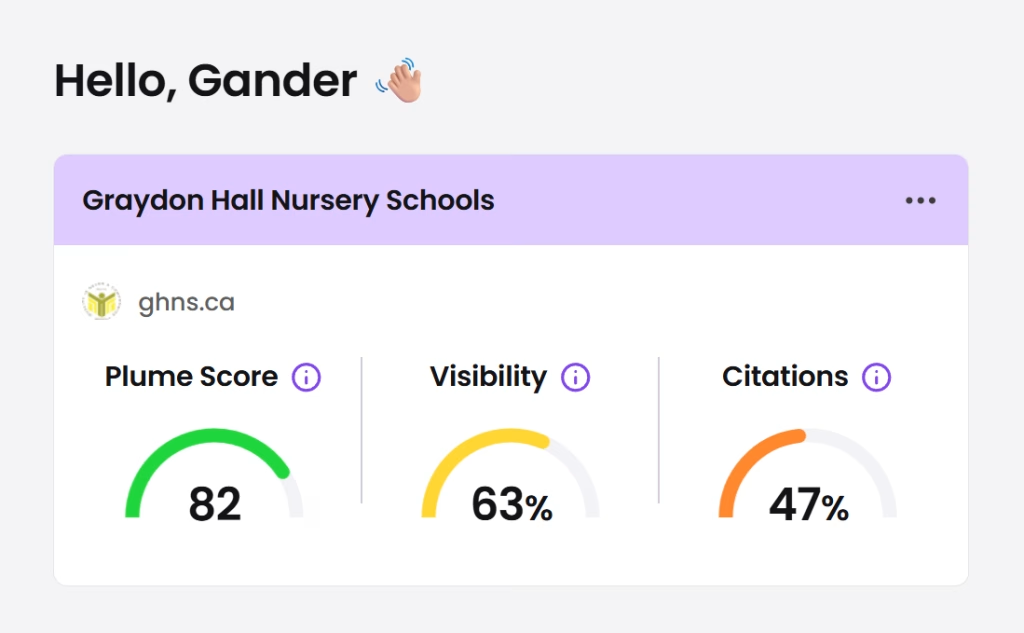
This is where the two tools diverge the most. Gander doesn’t just flag whether your brand shows up in AI answers, it tracks sentiment both in AI-generated responses and in the third-party links and sources those responses cite, and packages that into full citation and reputation reports built for client-facing use. That makes it genuinely useful for reputation management, not just visibility tracking: agencies and in-house teams can hand a client a report that shows not just “you were mentioned” but “here’s how you were talked about, and here’s where that language is coming from.”
Independent, hands-on reviews of Brand Radar consistently list sentiment analysis as a missing feature, alongside the ability to see the “top negative thing said about your brand,” period-over-period comparisons of how your standing has shifted, and citations broken down into owned, earned, paid, and competitor sources. None of that shows up in Brand Radar’s Overview report, which sticks to Share of Voice, mentions, citations, and impressions.
Winner: Gander, because it tracks a comparable core metric set plus sentiment, which independent reviews confirm isn’t a standard Brand Radar KPI, and it backs that up with a documented, purpose-built reputation and sentiment layer that Brand Radar doesn’t currently match.
Competitor analysis
Both tools let you see how you stack up against competitors in AI search.
Gander has a dedicated competitive-analysis section that automatically identifies your rivals and shows comparison data on overall performance and individual prompts, including the ability to view full competitor responses.
Ahrefs Brand Radar lets you add competitor brands directly in the same report and compares Share of Voice, mentions, citations, and impressions across all tracked entities side by side, including the ability to chart multiple brands’ performance over time on a single metric. One quirk independent testers have flagged: Brand Radar’s topic-matching can misfire when a competitor’s brand name doubles as a common word (one tester found a competitor named “Grin” was getting confused with the verb “grin” until they removed it from tracking), which is worth knowing before you trust topic-level competitive data at face value.
Winner: It’s a tie, since both tools give you genuinely useful, comparable competitive data.
Optimization
Gander audits your entire website, including technical elements like schema markup, semantic HTML structure, and WCAG accessibility compliance, then gives concrete recommendations for fixing what’s holding your AI visibility back.
Ahrefs Brand Radar is focused on discovery and reporting; it doesn’t include a dedicated technical AI-optimization audit, so the site-readiness side of AI visibility falls to a separate tool.
Winner: Gander, since it pairs visibility tracking with the technical audit that improves it, while Brand Radar stops at discovery.
Integrations
Ahrefs Brand Radar offers API and MCP Server access, a Looker Studio connector, and a Report Builder for pulling its data into your own reporting. Gander currently integrates with Google Search Console and Bing Webmaster Tools (in beta), with more planned, plus API-based monitoring.
Winner:It’s a tie, both give you workable ways to get the data where you need it.
Pricing
Gander starts at $150/month with full engine access included, each plan on a 14-day trial. Ahrefs Brand Radar requires an active Ahrefs plan (from $129/month) plus the Brand Radar add-on ($199/month per AI platform, or $699/month to bundle all of them), pushing the realistic cost of full coverage to roughly $828/month.
Gander plans (flat monthly, 14-day trial)
Plan | Pilot | Optimize | Authority |
Price | $150/month | $500/month | $1,000/month |
Number of prompts | 10 per LLM (40 total) | 50 per LLM (200 total) | 100 per LLM (400 total) |
Number of AI engines tracked | 4 | 4 | 4 |
Cadence | Daily | Daily | Daily |
Number of sites | 1 | Unlimited | Unlimited |
Number of competitors | 10 | 30 | Unlimited |
Number of languages | 1 | 1 | 1 |
GEO coaching | None | 30 min/month | 1 hour/month |
Ahrefs base plan (required under Brand Radar)
Plan | Lite | Standard | Advanced | Enterprise |
Base price | $129/month | $249/month | $449/month | From $1,499/month |
Credits (1 credit = 1 AI response) | 5 | 20 | 50 | Custom |
Number of AI engines tracked | 5 | 10 | 20 | Custom |
Brand Radar add-on (the AI-visibility product)
Tier | Select platforms | All platforms |
Price | $398/month | $699/month |
AI engines tracked | AI Overviews, AI Mode, ChatGPT, Perplexity, Copilot, Gemini | All platforms plus 466M-prompt index |
Custom prompt checks | 2,500 per month | Custom prompts included |
Cadence | Not published | Not published |
Number of languages | Not specified | Not specified |
Full-coverage cost: Lite $129 + All platforms $699 = about $828/month
Winner: Gander, since full engine coverage is included from its $150/month entry plan, with no per-platform add-on stacking.
Verdict: Which tool should you choose?
Choose Gander if you want full AI-engine coverage on every plan, a technical audit tied directly to visibility, and deep reputation/sentiment reporting, without add-on pricing. Choose Ahrefs Brand Radar if you’re already an Ahrefs customer and want a quick, database-driven read on AI visibility layered onto your existing SEO subscription.
Lead in AI search with full-coverage visibility tracking built for exactly that job. Try Gander risk-free and see how you show up across every major AI engine.