
37% of users now prefer using AI tools (as opposed to traditional search engines like Google) to get answers to their questions, find new products or services, and compare brands. If your brand isn’t part of the answer ChatGPT or Google AI Mode gives them, you’re invisible to a fast-growing share of buyers, no matter how well you rank in classic Google search.
That’s the gap GEO (Generative Engine Optimization) tools are built to close. Semrush is best known as the giant of traditional SEO and PPC research: keyword data, backlink audits, competitor ad intelligence, and it bolted on an AI Visibility Toolkit in the last year to keep pace with the shift to AI search. Gander, by contrast, was built from day one as a dedicated AI-visibility platform.
In this guide, we compare Gander vs. Semrush’s AI Visibility Toolkit specifically (not Semrush’s entire product suite), looking at LLM coverage, pricing, onboarding, technical audits, and more, so you can decide which is the right fit for tracking and improving your AI search presence.
TL;DR: Which GEO tool fits your business?
Semrush is, first and foremost, a traditional SEO and PPC platform, one of the largest in the industry, founded in 2008 and built on nearly two decades of crawl data, keyword and backlink indexes, and dozens of tools for rank tracking, site audits, and ad research. Its AI Visibility Toolkit is a genuinely useful add-on layered onto that suite, not the reason most customers buy Semrush in the first place.
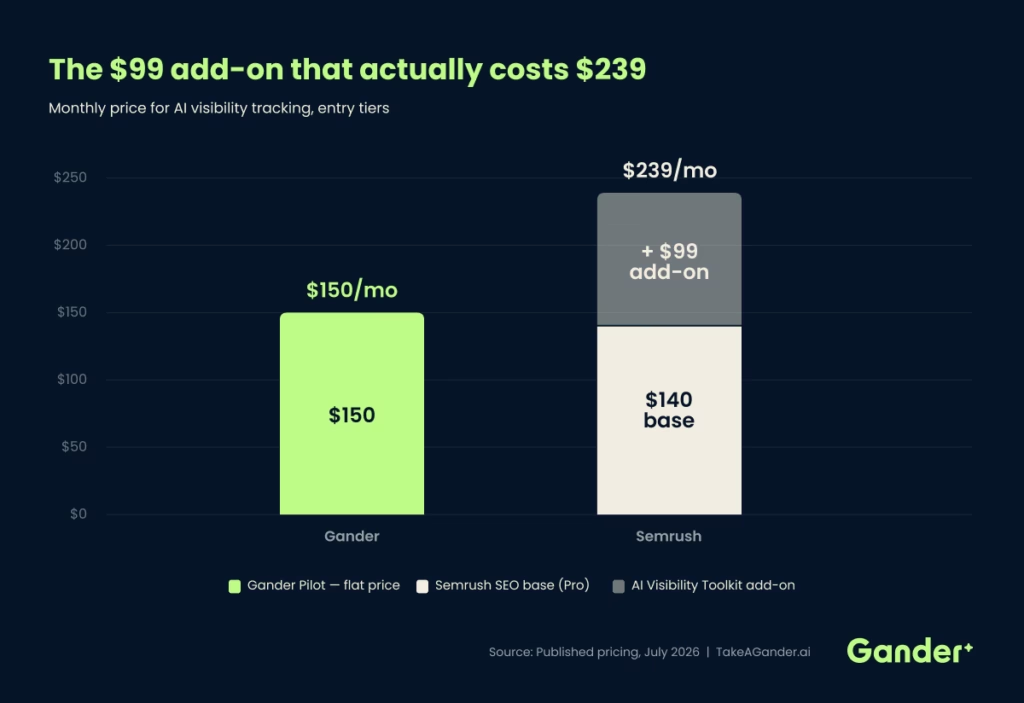
That distinction matters for three reasons. First, Semrush’s AI visibility features are priced and packaged as an add-on at $99/month on top of a base SEO subscription that starts around $117-140/month, so getting AI visibility tracking from Semrush usually costs meaningfully more than Gander’s entry price, even before you factor in Semrush’s own bundled “Semrush One” plans. Second, Semrush gatekeeps scale: its entry-level AI add-on caps you at 25 tracked prompts and one domain, while Gander’s plans are built around unrestricted AI visibility tracking from the ground up. Third, Semrush gives you a much bigger toolbox beyond AI visibility (backlinks, PPC, content, local, social) if you need it, which is either a huge value-add or a lot of unused surface area, depending on what you actually need.
A quick glance at Gander vs. Semrush
Feature | Gander | Semrush (AI Visibility Toolkit) |
Stand-out feature | Dedicated, API-based AI-visibility platform that doesn’t limit fan-out queries or throttle LLM coverage by plan tier | One AI-focused module inside a massive, nearly two-decade-old SEO/PPC suite, strong on tying AI visibility back to traditional search and site-health data |
LLM coverage | ChatGPT, Gemini, Perplexity, Google AI Overviews, and Google AI Mode (in beta), no matter your plan | ChatGPT and Google AI Mode as core Prompt Tracking targets; broader Brand Performance/Visibility Overview reports also draw on Gemini and other AI platforms |
Pricing | Pilot $150/mo, Optimize $500/mo, Authority $1,000/mo, AI visibility is the whole product | AI Visibility Toolkit add-on is $99/mo on top of a paid SEO plan (Pro ~$140/mo, Guru ~$250/mo, Business ~$500/mo); or bundled into Semrush One tiers (Starter/Pro+/Advanced) |
Onboarding | Runs your prompts 6 times initially, and daily after that; personalized onboarding call included | Set up inside an existing Semrush account; entry AI add-on tier includes 25 tracked prompts, with data refreshed daily to weekly depending on the report |
KPIs tracked | Citations, visibility, mentions, and average positioning, with sentiment analysis in beta | AI visibility score, share of voice, brand sentiment/perception, mentions-vs-citations distinction, competitor gaps |
Competitive benchmarking | Tracks competitors’ visibility, citations, and mentions per prompt; full response view for competitors | Competitor Research report shows where rivals get cited and you don’t, plus a share-of-voice-vs-sentiment comparison view |
Optimization solutions | Full technical audit (schema, semantic HTML, WCAG accessibility) plus an AI search console and insights engine; 1:1 coaching on higher plans | AI Search Health checks inside Site Audit flag AI-crawler blockers (limited to 100 pages on the entry AI add-on); no equivalent semantic-HTML/WCAG-depth audit found in independent documentation |
Integrations | GSC and BWT in beta, API-based monitoring | Native GA4 and Google Search Console integration across the broader Semrush platform; deep API access on higher-tier plans |
Reputation/sentiment depth | Tracks sentiment in AI answers AND in third-party links/citations feeding those answers, rolled into full client-ready citation and reputation reports | Brand Performance reports cover sentiment within AI answers; a separate, older Media Monitoring app tracks brand sentiment across news/blogs/forums/social, but these are two distinct tools, not one integrated AI-answer-plus-web reputation report |
Best for | Small-to-mid sized in-house teams, agencies, government organizations that want AI visibility as a focused, standalone product | Teams already invested in Semrush’s SEO/PPC ecosystem who want AI visibility as one more module in a much bigger platform |
Now, let’s compare each feature of the two tools in detail.
Core methodology
Both tools work by running prompts through generative AI tools to see how and whether your brand shows up in the answers. Semrush leans on its enormous existing data operation for this: independent coverage of the toolkit confirms Semrush advertises a 239M+ prompt database that refreshes daily for its AI Visibility Index. Semrush also markets a “2026 AI Visibility Index report” claiming analysis of 126 million U.S. AI search prompts from January through April 2026, though this figure is currently reported only through Search Engine Land, which Semrush itself acquired in 2026 per PPC Land’s coverage of the acquisition . Directionally, though, it reflects Semrush’s core strength: data scale accumulated over nearly two decades of web crawling since its 2008 founding.
Gander takes a narrower, more direct approach: it runs your specific prompts (not an aggregate market index) directly against live LLMs via API, without changing default parameters like fan-out query limits. That means what you see in your Gander dashboard reflects exactly what a real user would see asking that question, not a modeled estimate. This matters because of how fan-out queries work: when you ask an AI chatbot a question, the underlying model often breaks that question into several sub-questions and runs them in parallel to gather more grounding data before combining the results into one answer. Restricting how many of those sub-queries run, which some GEO tools do to control compute cost, means the platform is seeing a narrower slice of what the model actually considered, and your visibility data ends up describing a smaller world than the one real users experience.
The practical difference: Semrush’s AI Visibility Score benchmarks your brand’s mention frequency against the “median” of your automatically identified competitors, which is useful for macro benchmarking but is a step removed from your literal prompt-by-prompt visibility. Gander is built around tracking your specific prompts and how consistently you appear when they’re run repeatedly, which matters because LLMs can give different answers to an identical prompt from one run to the next, so a single snapshot tells you much less than a repeated-run baseline does.
🏆 Winner: Gander, for teams whose priority is precise, prompt-level tracking of their own visibility rather than aggregate market benchmarking. Semrush’s larger dataset is a real advantage if what you want is industry-wide trend data rather than your own brand’s specific footprint.
Onboarding
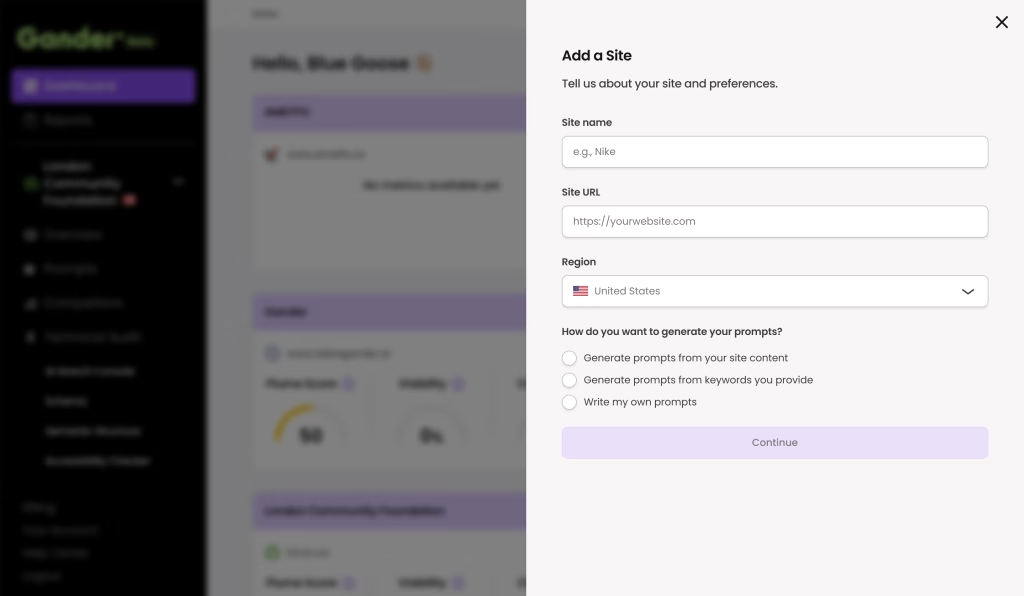
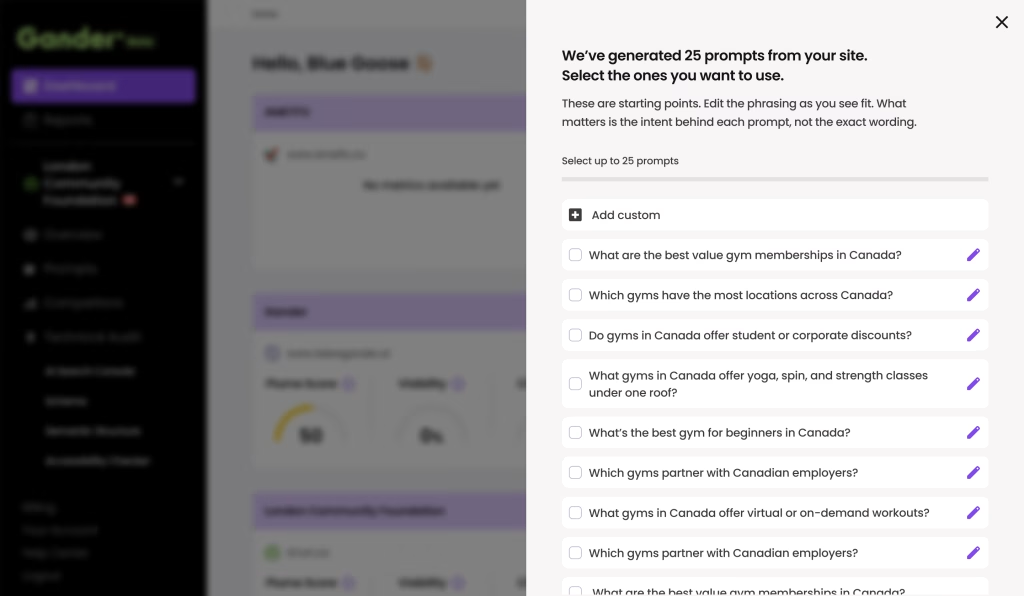
Gander lets you generate prompts by having the tool analyze your site, by pasting in keywords to turn into prompts, or by writing your own from scratch, and you can edit them any time. During onboarding, Gander runs each prompt 6 times to build a reliable baseline before switching to daily tracking, and includes a personalized onboarding call to help teams get set up correctly from day one.
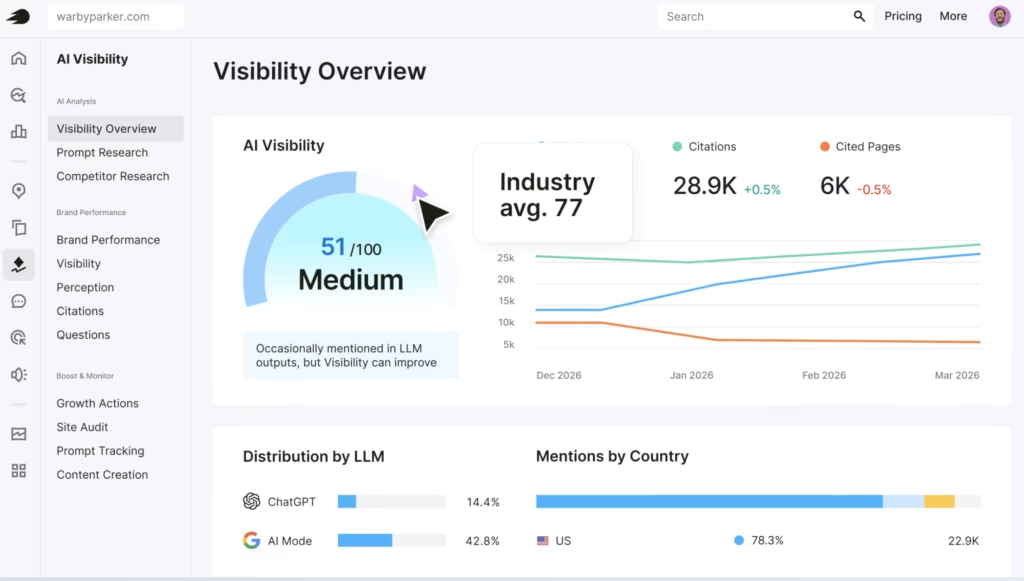
Semrush’s AI Visibility Toolkit is set up inside your existing Semrush account (or as a new signup) and, on the entry-level $99/month add-on, gives you 25 prompts for Prompt Tracking, 300 daily queries in AI Analysis reports, and 1,000 daily queries in Prompt Research. Because it’s layered onto Semrush’s existing project structure, teams already using Semrush for SEO can spin it up quickly; teams new to Semrush have a much bigger platform to learn simultaneously, since the AI toolkit shares navigation, project settings, and billing with the rest of Semrush’s suite rather than functioning as a standalone product.
🏆 Winner: Gander, because it’s purpose-built onboarding for AI visibility specifically, including live human support, versus configuring one module inside a much larger, more general platform where AI visibility is one of dozens of competing priorities in the interface.
Dashboard navigation
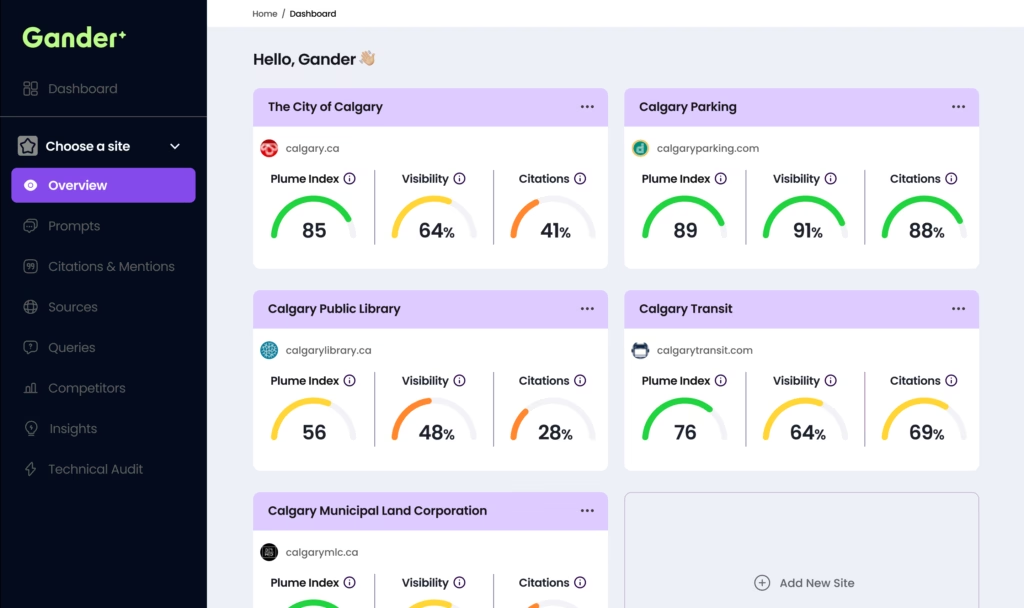
Both platforms present AI-visibility data in dedicated report views. Semrush organizes its AI Visibility Toolkit into five named reports: Visibility Overview, Competitor Research, Prompt Research, Brand Performance, and Prompt Tracking, sitting alongside dozens of unrelated SEO, content, PPC, local, and social tools in the same navigation. That breadth is a strength if you’re already a heavy Semrush user who wants everything in one login, but it also means AI-visibility data lives inside a much larger, busier interface where it’s easy for a report to get buried behind more frequently used SEO tools.
Gander’s dashboard is scoped entirely to AI visibility, so there’s no unrelated tooling to navigate around, and every menu item is directly relevant to the job of tracking and improving how your brand shows up in AI answers.
🏆 Winner: It’s a tie, since this comes down to whether you want AI visibility as a focused product or as one tab in a broader marketing suite you may already use daily. Teams consolidating tools will lean Semrush; teams that want a purpose-built workspace will lean Gander.
LLM coverage
No matter which pricing plan you choose, Gander tracks your AI visibility across ChatGPT, Gemini, Perplexity, Google AI Overviews, and Google AI Mode (in beta), the same coverage on every plan, with no features locked behind higher tiers.
Semrush’s independently reported documentation is less consistent on exact LLM coverage across its reports. Its AI Visibility Toolkit centers Prompt Tracking on ChatGPT and Google AI Mode, while third-party reviews of the toolkit describe broader scans across ChatGPT, Gemini, and Perplexity within other reports, with Gemini coverage in some areas still described as forthcoming rather than live.
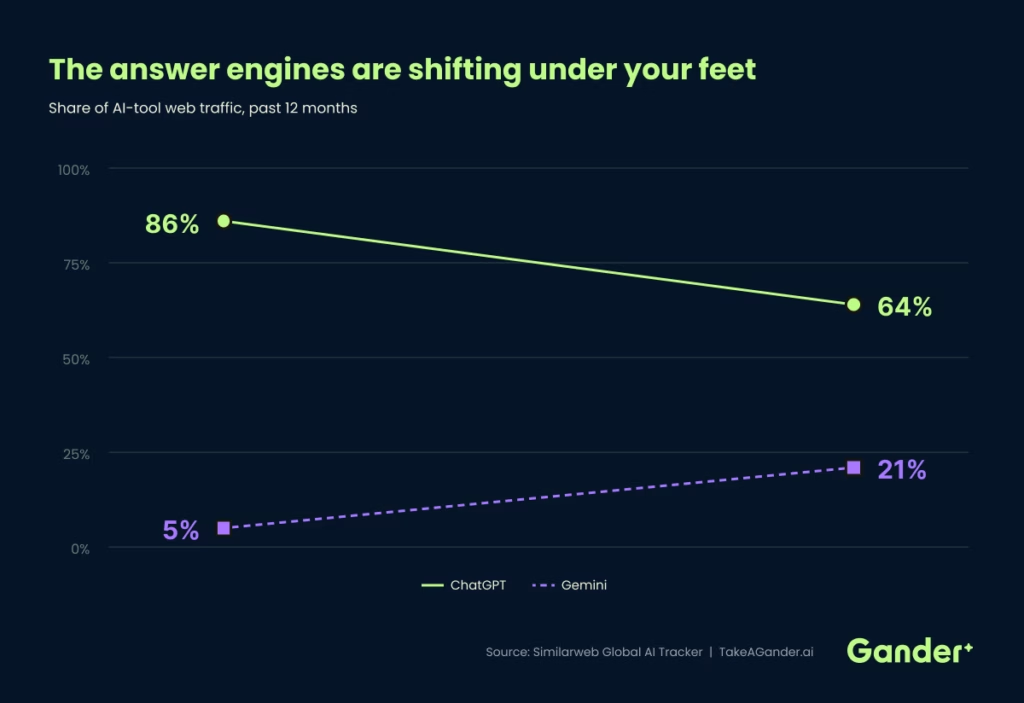
This gap matters more than it might seem, because the AI answer-engine market itself is shifting fast. Similarweb’s Global AI Tracker data shows ChatGPT’s share of AI-tool web traffic falling from roughly 86% to about 64% over the past year, while Gemini’s share climbed from around 5% to 21% over the same period. A tool that tracks Gemini inconsistently, or only on higher tiers, is tracking a shrinking share of a fast-moving market by definition.
🏆 Winner: Gander, on clarity and consistency: the same defined set of engines is tracked on every plan, with no ambiguity about what’s covered at what tier, and no need to upgrade just to see a fast-growing engine like Gemini.
KPIs tracked
Metric | What it means | Gander | Semrush |
Citations | Links back to your site that AI cites as a source | Yes | Yes (tracked separately from mentions) |
Mentions | Times your brand is named, cited or not | Yes | Yes |
AI visibility score | A composite score for overall AI presence | Yes | Yes (benchmarked against competitor median) |
Average positioning | Where you rank within an AI answer | Yes | Not confirmed in independent documentation |
Share of voice | Your visibility relative to competitors | Not a named metric | Yes |
Brand sentiment | Tone of how AI describes your brand | In beta | Yes, plus “narratives” driving the sentiment |
Semrush explicitly distinguishes mentions (being named) from citations (being linked to as a source) and flags when the two diverge, a useful framing for diagnosing “AI knows you but doesn’t send traffic” situations, where your brand comes up frequently in conversation but rarely as a clickable source. Gander’s KPI set is narrower but more focused on prompt-level accuracy: rather than rolling everything into a single composite score, it shows you exactly which prompts you appear on, how consistently, and where you rank within the answer, with sentiment analysis currently in beta as that feature matures.
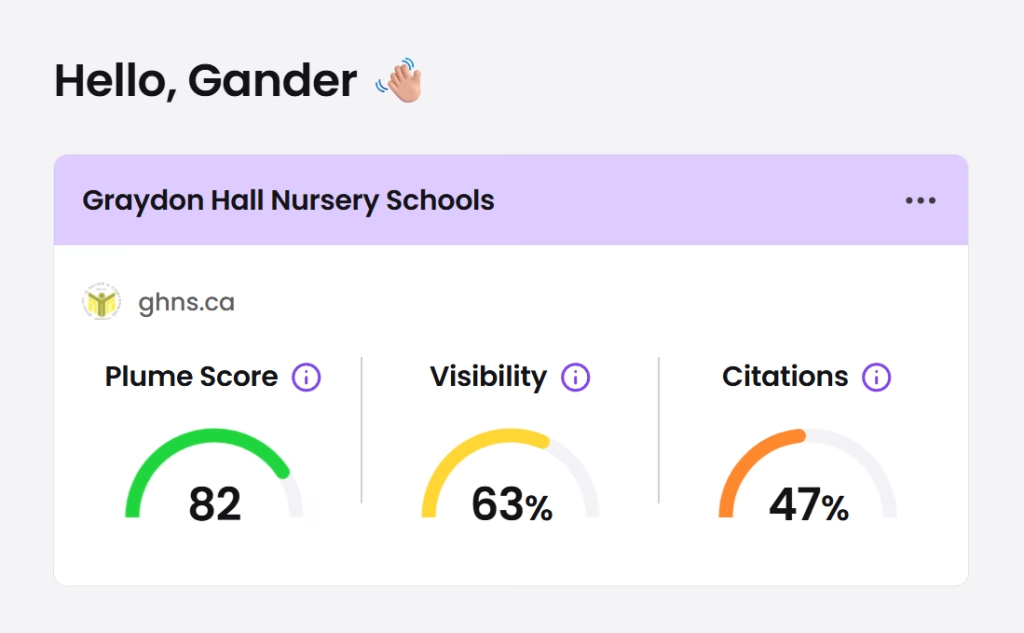
This is worth calling out specifically because it’s an area where the two tools genuinely differ in scope. Gander’s sentiment tracking (in beta) is built to cover both sentiment expressed directly in AI responses and sentiment carried in the third-party links and sources that feed those responses, rolled up into a full citation-and-reputation report that agencies can hand directly to clients without additional assembly.
Semrush’s Brand Performance reports track sentiment and “narratives” within AI-generated answers specifically. Separately, Semrush also offers a Media Monitoring app, part of its broader App Center rather than the AI Visibility Toolkit itself, that tracks brand mentions and sentiment across news sites, blogs, forums, and social media. These appear to be two separate tools rather than one unified reputation workflow that connects AI-answer sentiment to the third-party web sources driving it.
🏆 Winner: Semrush, since its Brand Performance suite tracks a broader set of perception metrics (share of voice, sentiment, narrative themes) out of the box, which is valuable if you want a single dashboard covering both visibility and reputation without waiting on a beta feature. That said, on the narrower point of unifying AI-response sentiment with third-party-source sentiment into one client-ready reputation deliverable, Gander is the stronger fit, though this is worth reconfirming periodically since Semrush ships new AI features quickly and could close this gap.
Competitor analysis
Both tools benchmark you against competitors, but they surface that data differently. Gander has a dedicated competitive-analysis section that automatically identifies rivals and shows comparison data both overall and prompt-by-prompt, including full visibility into competitors’ complete AI responses, not just whether they were mentioned but the exact wording of the answer they received.
Semrush’s Competitor Research report shows where competitors get cited on prompts and topics where you don’t, which is useful for finding content gaps, and its share-of-voice-vs-sentiment view plots your brand against rivals on both dimensions at once, letting you see at a glance whether a competitor is winning on visibility, sentiment, or both.
🏆 Winner: It’s a tie, both give genuinely useful, differently-shaped views of the competitive landscape: Gander for granular, prompt-level competitor responses, Semrush for a wider-angle view that ties competitor visibility back to its broader keyword and content data.
Optimization
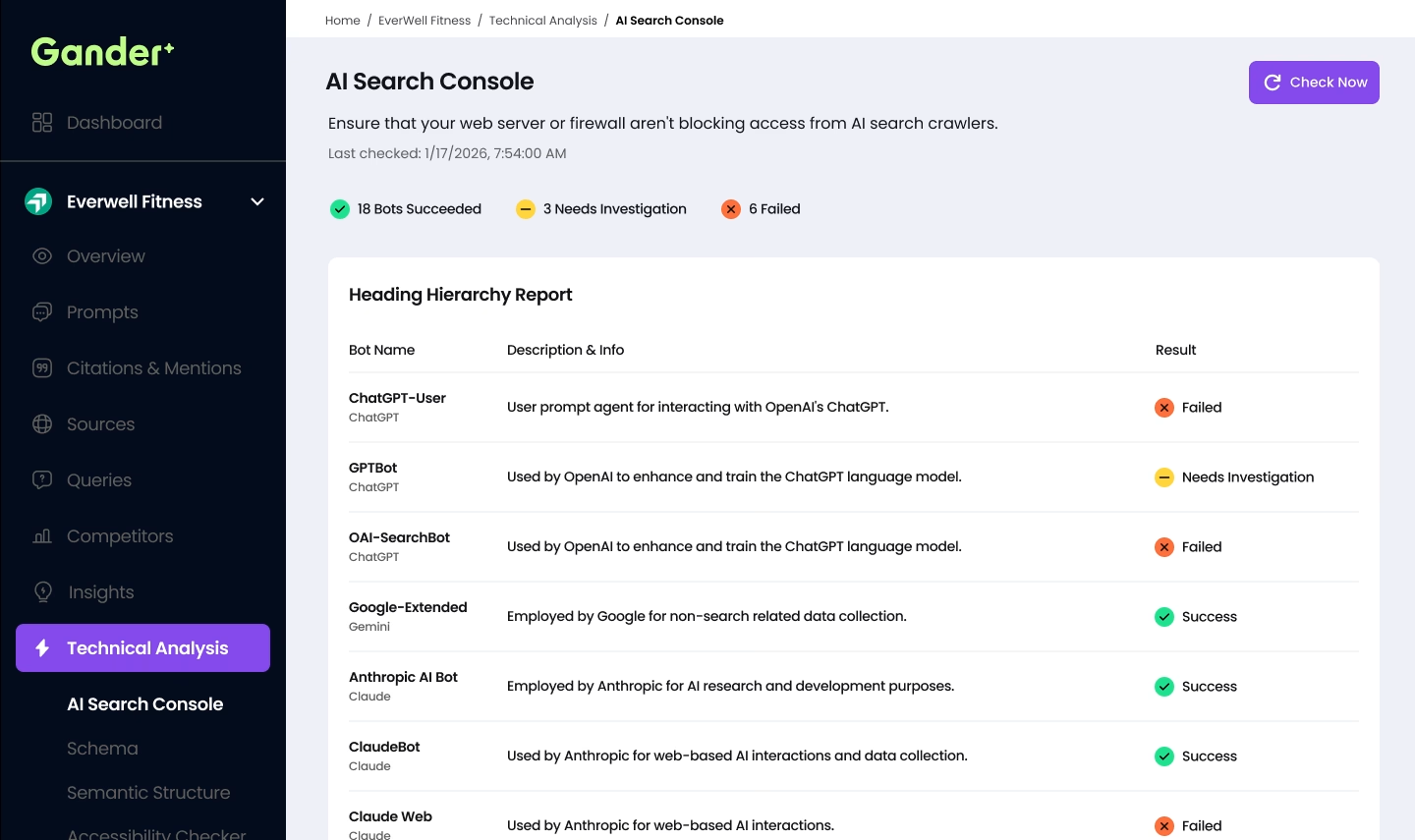
Gander audits your entire website for AI-readiness, including technical elements like schema markup, semantic HTML structure, and WCAG accessibility compliance, then gives concrete recommendations for fixing each issue. Optimize and Authority plans add 1:1 coaching with search experts, so teams that need hands-on help interpreting the audit aren’t left to figure it out alone.
Semrush’s AI Search Health widget inside Site Audit flags technical issues that could block AI crawlers, but on the entry-level AI Visibility Toolkit add-on, that check is capped at 100 pages. Independent documentation didn’t surface an equivalent depth of semantic-HTML or WCAG-specific auditing tied to AI visibility specifically. That gap matters if technical readiness is part of your strategy, since whether a model can crawl and trust your pages affects whether you get cited at all.
🏆 Winner: Gander, for teams that want AI-visibility tracking and the technical audit that improves it in one place.
Verdict: Which tool should you choose?
Choose Gander if you want AI visibility as a focused, standalone product, the same engine coverage on every plan, and a technical audit tied directly to it. Choose Semrush if you’re already invested in its SEO/PPC ecosystem and want AI visibility as one more module tied back to your broader search data.
Lead in AI search with visibility tracking built for exactly that job. Try Gander risk-free and see how you show up across every major AI engine.